‘In the now’: Holding it together while the world feels like it’s falling apart

By Shamecca Brown-Granite State News Collaborative

We are living in a moment when it feels like the world is constantly on edge. There’s an unshakable sense that time is moving fast while so many of us feel stuck, bracing ourselves for what comes next. Every time we look up, there’s another headline, another crisis, another reminder that nothing feels stable anymore. Wars we can’t escape seeing on our phones. Children growing up faster than they should. Families one emergency away from losing everything. Systems that were already cracked are now completely breaking under pressure.

Yet we are still expected to wake up, go to work, parent, smile, pay bills – and act like this level of chaos is normal.

It’s not.

What feels most exhausting isn’t just what’s happening globally, it’s how heavy it all feels inside our bodies. The quiet anxiety we carry. The clenched jaws. The deep sighs we don’t even realize we’re taking. The way our nervous systems are constantly in fight-or-flight mode, even when we’re sitting still. We are processing grief in real time while being told to keep moving forward.

There’s a strange loneliness in knowing so many people are struggling, yet feeling like we have to struggle silently. Everyone is hurting in different ways, but the pain overlaps. Mental health is in crisis, families are stretched thin, and people are surviving instead of living. The cost of simply existing feels higher than ever financially, emotionally, spiritually.

And for communities that were already marginalized, already overlooked, already under-resourced, this moment hits harder. There is a deep frustration in watching decisions being made by people who will never feel the consequences. There is anger in seeing wealth protected while everyday people are told to “figure it out.” There is grief in watching compassion get buried under politics, profit and power.

What hurts the most is the feeling that humanity itself is being tested, and too often failing. We see cruelty justified. We see empathy labeled as weakness. We see people dehumanized because of where they’re from, who they love, how they identify, or how much money they don’t have. And somehow, we’re expected to not let that harden us.

It takes strength to still care. It takes courage to feel deeply when it would be easier to shut down. It takes intention to raise children with values of kindness, accountability and truth when the world is loud with hate and misinformation. It takes resilience to keep showing up for others when you yourself are running on empty.

Many of us are carrying private battles the world knows nothing about – illness, loss, financial stress, fear about the future, concern for our children, worry about our partners, aging parents, or our own mental health. We are learning how to function while grieving outcomes that haven’t even happened yet. That kind of anticipatory grief is real, and it’s heavy.

Still, in the middle of all this – the good and the bad, the hope and the heartbreak – people are finding ways to love. To help. To show up. To build community where systems have failed. To listen. To advocate. To write. To speak. To hold space for one another when everything feels like too much.

That matters. Especially now, as we enter 2026, when it’s becoming clearer that no one is meant to survive this moment alone.

It matters that there are teachers who still care deeply about their students. Advocates who refuse to give up on survivors. Parents who are trying to raise emotionally aware children. Neighbors checking on neighbors. Writers telling the truth. Everyday people choosing empathy, even when it costs them something.

Being “in the now” doesn’t mean ignoring what’s happening. It means recognizing that as human beings, we need each other more than ever, across differences, across pain, across perspectives, even when it’s uncomfortable. It means acknowledging it fully, without sugarcoating, without pretending we’re okay when we’re not. It means giving ourselves permission to feel anger, sadness, fear, and hope all at the same time. It means understanding that two things can be true: The world can be on fire, and we can still find moments of beauty worth protecting.

If you’re tired, you’re not alone. If you’re overwhelmed, it makes sense. If you’re still trying, even on the days you feel like giving up, that says more about your strength than you probably realize.

In 2026, maybe the goal isn’t to have all the answers. Maybe it’s to choose kindness more often than cruelty. To protect what truly matters – our children, our elders, our communities, our mental health, our shared dignity. To remember that needing one another isn’t weakness; it’s how we survive.

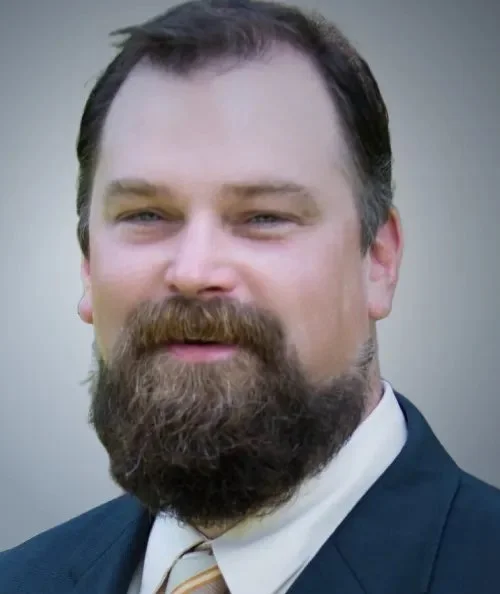
Shamecca Brown is a New Hampshire-based columnist who is family-oriented and passionate about serving underserved communities. These articles are being shared by partners in the Granite State News Collaborative. For more information, visitcollaborativenh.org.

N.H.’s rural health care windfall an ‘investment,’ but won’t make up for billions in lost Medicaid funds

Despite over $700 million coming from the federal government, ‘significant challenges’ still lie ahead


By Meera Mahadevan-Granite State News Collaborative

State officials and local hospitals are thrilled to be getting a large financial bounty from the federal government, hoping it will help stabilize rural health care in New Hampshire. 

That enthusiasm, however, is tempered by cautious optimism amid drastic cuts in Medicaid and the threat of rural hospital closures and dwindling operating margins.

The U.S. Centers for Medicare and Medicaid Services (CMS) announced late Monday that it will award New Hampshire over $204 million for 2026 as part of its federal Rural Health Transformation Program, a $50 billion, five-year initiative that is part of the so-called One Big Beautiful Bill Act signed during the summer. 

The money announced this week comes on top of the $500 million each of the 50 states will receive over five years, also as part of the $50 billion allocation. 

New Hampshire’s portion is the largest among the New England states and is slightly more than the $200 million that the state had requested. Maine and Massachusetts will receive $190 million and $162 million, respectively. New Jersey will get the lowest amount in the country at $147.3 million and the highest will go to Texas at $281.3 million. 

“We are very pleased to see New Hampshire is going to be receiving $204 million to strengthen health care,” said Steve Ahnen, president of the N.H. Hospital Association, which represents the state’s 31 acute care and specialty hospitals.

But, he added, the new money will not compensate for the estimated $3 billion to $3.5 billion cut in Medicaid funding the state will face over the next decade under the same law, as well as potential revenue losses stemming from a significant increase in the number of uninsured people that is expected after the expiration of Affordable Care Act premium tax credits. The Medicaid cuts start in 2028.

“We have some significant challenges ahead of us,” Ahnen said. “Can we use these dollars to stem some of those headwinds? It’s not a replacement of those funds we will lose, but $204 million is a significant investment that we should take advantage of.” 


‘Beginning of a bold effort’

The federal money comes at a time when health policy analysts and think tanks have said that about 30 percent of rural hospitals in the U.S. are at risk of closing, including at least four hospitals in New Hampshire, due to high costs and poor reimbursements for services. 

However, those hospitals, including Cheshire Medical Center in Keene and Concord Hospital-Laconia, said they are safeguarded by the fact that they are affiliated with larger entities such as Dartmouth Health System and Concord Hospital Health System, which can help mitigate their financial losses.

Ahnen said the state’s 13 rural hospitals are often the sole source of emergency care, primary care and behavioral health services for large geographic areas in the state, but face persistent workforce shortages, rising health care costs and growing demand for care. 

Non-rural hospitals in the state are also squeezed by low government reimbursements and insurance payment delays, and Ahnen said that all of New Hampshire’s hospitals stand to benefit from the new funding. 

“New Hampshire is a very rural state,” he said. “There’s opportunities to invest these dollars to help all hospitals. The tremendous focus on rural hospitals is appropriate. We are going to work to ensure that the health care system functions together. The last thing we want to do is create silos.”

Gov. Kelly Ayotte’s office, which submitted an application to CMS in November, said it received input from more than 300 stakeholders, including rural hospitals and mental health centers before submitting the application. 

The state hopes to allocate money to improve health care access, improve workforce shortages and boost the use of technology, such as telehealth services and use of artificial intelligence. It is not clear exactly how the state will disburse the money and whether it will be given directly to hospitals, clinics and other entities, such as high schools and colleges that may participate in strengthening rural health care.

Ayotte has created an office known as GO-NORTH — the Governor’s Office of New Opportunities and Rural Transformational Health — to help plan and implement its ambitious initiatives. The office will also monitor and assess how the money is being spent once it’s been distributed. 

“This is the beginning of a bold effort to expand access to affordable, high-quality care closer to home for Granite Staters in rural communities,” Ayotte said.

The new funding does not require states to use the money solely for rural hospitals and caps the amount of money that can be spent on hospitals and other providers at 15 percent. 

The funding also contains some controversial requirements, including that the money cannot be spent on gender-affirming care or reimbursement for most abortion services, according to KFF, formerly known as Kaiser Family Foundation, a research organization. KFF reported that the funding also places limitations related to citizenship documentation requirements.

“Many hospitals do not currently collect patient immigration status, but may need to do so to be reimbursed for patient care with rural health funds,” KFF said in one of its reports assessing the rural health fund.

These articles are being shared by partners in the Granite State News Collaborative. For more information, visit collaborativenh.org.

Why the Granite State News Collaborative’s Community News Survey matters

By Rosemary Ford and Caitlin Agnew

This article has been edited for length and clarity.

The Granite State News Collaborative, a network of local news organizations, is conducting a Community News Survey to take the pulse of news consumers in New Hampshire. Melanie Plenda, host “The State We’re In” — who’s also executive director of the collaborative is here to tell us what the survey is, why it’s being done and why you might want to participate. 

Rosemary Ford:

Melanie, what is the Community News Survey, and why is the collaborative doing it?

Melanie Plenda:

It is exactly what it sounds like. It is a very short — we promise — series of questions just trying to get at the heart of what people want from their news. What are they missing? What do they care about? We want to know what you're concerned about and how you get your news.

The whole reason for doing this is not only to shape the coverage across the state from all of our local news partners, all of whom will have access to the survey results. It’s not only to make sure that we're covering the things that people actually care about and we're answering questions that people actually have, but we also want to assess, “Are we delivering news in a way that people are consuming it?” Because it’s great that we have amazing coverage and amazing reporters and they're doing all this great work, but if we're not delivering it in a way that people are wanting to receive it, then that's a real problem. So it's really going to help us to better understand how people are interacting with news, — whether they're even consuming local news, and if not, why not? And how we might bring them back to local news.

Rosemary Ford:

What sorts of questions does the survey have? 

Melanie Plenda:

We tried to keep it very straightforward and also a little open-ended because we wanted to let people really kind of not just be relegated to some multiple-choice questions.

We do ask, “What kind of news do you consume?” Where do you get your news? If you do consume local news, what outlets are you reading, listening, or watching? What concerns you? What questions do you have about those sorts of things?” We do understand there's lots of surveys out there, and people have a lot of demands on their time, so we wanted to be mindful of that. So we wanted to keep it short and sweet, but really still be able to get to the heart of what would help us better serve our communities?

Rosemary Ford:

How will this survey help the Collaborative better serve the community? What will the answers help you do?

Melanie Plenda:

All of our 20-plus partners will have access to the survey results. So from there, individual outlets can assess where their coverage is relative to what people say they want. They may be able to see that a lot of people are actually getting their news on social media. So how can they do a better job of disseminating that information out on social media?

From the Collaborative perspective, I can help gather up that information, disseminate it out to the partners. And then once they've had a chance to assess what their needs are, what resources do they need in order to be able to get the news out in a way that will satisfy community members? If it turns out they do need some additional resources, or if they need a larger project then that's where I come in, and GSNC as an organization, can try to fill in those gaps or try to coordinate projects that will better help the partners do the work that they are best at.

Rosemary Ford:

Can you tell us about some of the challenges the Granite State’s news organizations are facing in these times?

Melanie Plenda:

This is nothing new that local newsrooms — not only across the state, but across the country — have really taken a hit in the last couple of decades. And by that, I mean they've lost reporting staff. Let's say, they have 20-plus communities in their coverage area, and only two or three reporters — sometimes only one —  there to cover it. What happens then? A lot of that watchdog piece that we are supposed to be there for, a lot of community connection pieces, aren't able to happen and that's a real shame.

It takes a toll on communities when local newsrooms go away altogether. Then really people are only left with national news, or the sort of doomscrolling that we all do on social media, and that can lead to people being more polarized, that can lead to local decisions being made that really impact everyone's daily lives without local people having a say on that. 

Now that said, I will say, and I will brag about our local news partners a bit. While everyone has struggled with maintaining a staff that can do the job they need to do, I'm really and just humbled every day by how dedicated our local reporters, editors and publishers are here in New Hampshire. They don't use it as an excuse that they don't have as full of staff as they would like to have. They just keep going, and they keep serving their community as best they can.

Rosemary Ford:

According to the Pew Research Center, 70% of U.S. adults have trust in local news while only 56% have trust in national news. Why do you think there is such a significant difference between the two? How is that playing into what local news organizations are doing?

Melanie Plenda:

The only way I really know how to answer that question is by looking at how local news reporters conduct their business.

Local news reporters live in the communities or near the communities that they cover, which means they are not just taking in information about their community or learning about their community in the eight or 10 hours that they're on the job. They're living there. They're going to restaurants. They're going to local businesses. They send their kids to the local schools. They are part of the community there. They have a vested interest in the community, and I think that absolutely makes a difference in coverage. I think that means that maybe you have a vested interest in providing just straight-up information to your neighbors so that people can make decisions. 

I have a lot of respect for a lot of the national news outlets, and they do present information. But I also think that a lot of times, the coverage is more about horse races and it's more about conflict and less about actual policy and information about those things that people need to make their decisions.

I do think that there's a difference in the way people feel when they read local news. I think most people pick up on that. I think they know that if they have a problem with something that's written in the local newspaper or their local online news outlet, they can call that person up and have a conversation with them and talk it out. There is the connection with local news that you don't get from other news resources.

Rosemary Ford:

According to the Pew Research Center, 38% of adults regularly get their news from Facebook, and 55% of TikTok users get news updates there. What’s the impact of this on local news?

Melanie Plenda:

People get a lot of their news on social media. I don't see that, in and of itself, as a bad thing. I do think that we should give people more credit than we do. I think many of them can tell the difference between very obvious disinformation, and that’s not what I worry about. There are sources that present themselves as legitimate or who play just a little bit fast and loose with facts,and people not being able to discern the difference — or worse, and probably more likely, don't have time to go do their own research to suss out whether that is true or not. 

In my perfect world. I think that local news — and maybe this is kind of what I'm hoping we might learn from our survey — is that if this is where people are getting their news, then I kind of feel like we need to flood the zone with accurate local news. If more of us were finding ways to innovate and bring local news to where people are getting their news — whatever the platform, I think we'd be doing the community a great service. Then kind of screaming it from the rooftops that we’re there. That's what I would like to see. A lot of outlets are doing that, they just need to do it more and get more creative.

Rosemary Ford:

Could you tell us more about that? How are local outlets adapting to that kind of social media environment?

Melanie Plenda:

I have noticed a lot more outlets embracing things like the idea of starting a podcast, or they're doing vertical videos for online or they're giving quick hits from meetings — just like a quick result, saying the story will be out later. So really interacting one-on-one through social media with their audiences. I've seen that over the past few years for sure, and I think that that's only going to increase. 

People are picking up on these sorts of innovations and new technologies and new media, and bringing those into their newsrooms and integrating them more into their day-to-day. And I think that's only a good thing.

Rosemary Ford:

So beyond the community news survey, how else can New Hampshire residents support local news organizations?

Melanie Plenda:

I would say, first and foremost, if everyone who is scrolling their social media shared one local news story a day, just imagine how many more people would be able to get connected to their local news. I think that is one of the best things you can do — not only to support local news, but to support your communities. You can be confident that those stories are written by people who live here, who care about your community and are trying to do right by it. I feel like that is one of the best ways to support local news and to help your community. 

You can also get a subscription to your local news outlet. You can give gift subscriptions during the holidays, for a birthday, why not? You can also donate to news funds that accept donations. You can also just reach out to your local news organization and see if there's opportunities to contribute, either as a writer or a volunteer, or if you have a special skill that you might want to share — all of those things help keep local news strong and keep our community strong right along with it.

Rosemary Ford:

Thank you Melanie.To take the Community News Survey, you can visit collaborativenh.org/communitysurvey.

“The State We’re In” is a weekly digital public affairs show produced by NH PBS and The Marlin Fitzwater Center for Communication at Franklin Pierce University. It is shared with partners in the Granite State News Collaborative, of which both organizations are members. For more information, visitcollaborativenh.org.

What’s the winter forecast for New Hampshire?


By Rosemary Ford and Caitlin Agnew

This article has been edited for length and clarity.

Having just come off our first nor’easter early in the season, the winter ahead seems daunting. With predictions of arctic cold in the coming weeks, should Granite Staters be prepared to hunker down? The Old Farmer’s Almanac predicts a mild winter, but what can we really expect? Here to discuss this is Mary Stampone, New Hampshire’s state climatologist and associate professor in the geography department at the University of New Hampshire.  

Melanie Plenda:

What kind of weather can we expect this coming winter? Will it be a heavy snow season?

Mary Stampone:

I expect we'll see a bit of the full range of possible winter weather conditions this season. We've already experienced some severe cold and snow, and the coldest part of the season is still ahead of us, so we'll likely see more of that. It is equally likely that we'll experience some milder weather this winter, as that has become more common in response to global warming.

Melanie Plenda:

What is your process of collecting and analyzing climate data that will go out to the public? How do you spot patterns and make predictions from this?

Mary Stampone:

We all use weather forecasts for daily conditions, but when we need to look ahead over a month or a season, we usually refer to long-term outlooks, which go beyond the weather for the next week or two. Because we're looking so far ahead, the information and a seasonal outlook is less detailed than what we get with a weather forecast. 

So, for example, outlooks can't tell us what the temperature will be on any specific day in January or February, or even how much total snow we're going to get this season. But what they do give us is a sense of the type of conditions, and these general conditions are what we can most likely expect to experience over the course of the next several months. 

Melanie Plenda:

Can you tell us about the polar vortex? What is it and how will it affect us here in New Hampshire?

Mary Stampone:

The polar vortex is a low pressure system that sits high in the atmosphere. It's typically centered over the pole, but it exists year-round. It's not just a temporary thing. It's always hanging out there, and the spin around it keeps that cold arctic air in the Arctic.

Occasionally, it weakens, and when it weakens, it kind of wobbles around. It can even expand or split. When that happens, that cold arctic air can plunge south, even as far south as Florida. It brings colder-than-normal weather into the U.S. These events can happen once or twice a year, or even not at all. They typically last maybe a few weeks or so, and they're not a permanent weather pattern.

Melanie Plenda:

What does that usually look like when that does occur in New Hampshire?

Mary Stampone:

It tends to bring extremely cold and dangerous weather to New England. But again, it tends to be temporary. You may hear on your forecast, “We’re having an arctic outbreak or a cold weather outbreak headed our way.” A lot of times those are the kinds of patterns that we can expect with the polar vortex weakening.

Melanie Plenda:

Is the polar vortex weakening becoming more frequent, and how is it connected, if at all, with climate change? 

Mary Stampone:

This is a fantastic question. Overall, we don't have a long enough record to determine if there is a trend toward a more frequent weakening of the polar vortex, or if this is simply part of some natural variability that we haven't yet captured. However, recent observations indicate that the position of it and how strong or weak it is may be impacted by sea ice and the changes in sea surface temperatures and the air pressure associated with the loss of Arctic sea ice due to global warming. So there's a lot of uncertainty still here in the research, but there is a scientific basis for the idea that we could be seeing more cold air outbreaks as the world warms. 

Melanie Plenda:

How does this colder weather brought on by the polar vortex impact the state on a larger scale? Will it affect crops and agriculture?

Mary Stampone:

Again, this weakening pattern with the cold air plunge is a temporary pattern. It can be dangerous if you have to be outside, but again, it's usually a couple of weeks at most. 

So for us, we're expecting this pattern to kind of persist through December, but by the end of December, going into the new year, temperatures are expected to shift back to average, or even above average, for what we expect to be probably a milder winter, along the lines of what we've seen in recent years. 

Melanie Plenda:

Are there other impacts with the colder weather brought on by the weakening of the polar vortex?

Mary Stampone:

It's a dangerous cold as the event is happening, but once it strengthens and re-forms, things kind of go back to normal. So that cold air gets put back up into the Arctic, and we tend to have the normal. or the more average weather that we can expect. 

Melanie Plenda:

From a climate change perspective, what can New Hampshire residents expect going forward for winters here?

Mary Stampone:

Winters across the board in New England and the Northeast are warming, and with it, we're seeing less snow and ice as well as milder conditions. So fewer deep freezes — we still get them, obviously, we get them connected with the polar vortex weakening, but they're becoming less frequent over time. This has a lot of different impacts that kind of extend beyond the winter season.

But here, we're seeing a reduction in energy needed for heating in the winter. We're seeing a contraction of the winter season. So snow happens later, and snow melt happens earlier. We're also seeing mid- season melts that reduce our snowpack. These have implications beyond the winter season. Groundwater recharge during the spring can be impacted. Also, it's these deep freezes that help kind of manage invasive species, and so winter warming can have some impacts that go beyond just the winter season.

Melanie Plenda:

What about La Niña? Will that have an impact this winter?

Mary Stampone:

So La Niña is one part of that El Niño sea surface temperature pattern that we observe in the Pacific Ocean. It can impact weather in the midlatitudes across North America. La Niña winters generally tend to favor greater snowfall in the Northeastern U.S.

However, the strength of the pattern matters. A weak La Niña — which is what we're expected to be in through the end of December into January — is usually associated with a lot of uncertainty. It's very difficult to say that this winter is going to be snowier than average. When we're talking about a weak La Niña, overall, our seasonal outlooks still favor greater-than-average precipitation. 

Melanie Plenda:

What resources should the public be aware of in finding the most reliable winter weather updates and preparing for bad weather?

Mary Stampone:

First, I say go straight to the source, which is the National Weather Service. They have regional forecast offices that produce excellent forecast information. This is a great place to go anytime you want to kind of look ahead for any coming winter weather at home or wherever it is you might be traveling.

For folks who are heading up to the White Mountains this season, I would encourage you to look at the Mount Washington Observatory forecast. They provide really great detailed information for higher-elevation weather conditions, which can be very different from what we see at lower elevations.

And closer to home, in my experience, your local broadcast meteorology team tends to have some of the most accurate local-scale information on local conditions.

Melanie Plenda:

Mary, I’ll get my shovel ready! Thank you for joining us today.


“The State We’re In” is a weekly digital public affairs show produced by NH PBS and The Marlin Fitzwater Center for Communication at Franklin Pierce University. It is shared with partners in the Granite State News Collaborative, of which both organizations are members. For more information, visitcollaborativenh.org.

Report paints grim financial picture for some of the state’s rural hospitals

State’s health care community anxiously awaits decision on federal Rural Health Transformation Fund


By Meera Mahadevan , Granite State News Collaborative

New Hampshire’s 13 rural hospitals — long under financial distress and some even at risk of closure — are waiting eagerly to see if they will get some relief from the federal government before the end of the year.

 A report from a Pittsburgh-based think tank, the Center for Healthcare Quality and Payment Reform, says 30% of rural hospitals in the U.S. are at risk of closing mainly because of inadequate payments from health insurance plans and drastic cutbacks in Medicaid.

At least four hospitals in New Hampshire face the risk of closing, the report says, with two facing an immediate threat, based on the organization’s extensive analysis of hospital finances submitted to the Centers for Medicare and Medicaid Services.

Joe Perras is president of Cheshire Medical Center in Keene, which a recent report lists as having negative trends that could potentially put it at risk of closing, but he says because the hospital is affiliated with the Dartmouth Health system it is ‘in a stronger position, albeit challenged.’ (Keene Sentinel photo)

 The think tank declined to name the specific hospitals that might be facing closure, but said the data, especially the negative trend in profit margins among some hospitals over several years, indicates that hospitals might have to close or seek alternate ways to survive, such as being acquired or buoyed by larger entities that own the struggling hospitals.

 The two New Hampshire hospitals with negative financial trends, the report says, are Dartmouth Health’s Cheshire Medical Center in Keene and Concord Hospital-Laconia. 

 Littleton Regional Healthcare is also in the red, but it agreed in September to affiliate with Dartmouth Health — an agreement that is under review by the state Attorney General’s Office. The fourth hospital with poor margins is Cottage Hospital in Woodsville. 

 “Although Cheshire Medical Center has had operating losses, we closed FY25 with a positive operating margin due to increased clinical volumes across the organization,” said Joe Perras, president of Cheshire Medical. “The report does not consider whether ‘at-risk’ hospitals are independent or part of larger health systems. 

“In our case, fortunately, Cheshire is a member of the Dartmouth Health system, which puts us in a stronger position, albeit challenged. Barring some unforeseen circumstance impacting the entire health system, the risk of closure is of no concern due to our affiliation with the Dartmouth Health system,” Perras said.

 Medicaid funding changes

 There is hope for some possible relief that could help rural hospitals. The so-called One Big Beautiful Bill Act that Congress enacted in July includes significant upcoming cuts in Medicaid, a state and federal health insurance program for low-income and disabled people. However, that bill also includes a $50 billion payout, known as the Rural Health Transformation Fund.

 Half of that $50 billion will be distributed to all 50 states evenly, which means $500 million to New Hampshire. 

Some say the equal distribution offers an advantage to small states like New Hampshire, which would receive the same amount of money as much larger states, such as Texas and California. The remaining $25 billion will be distributed to states at the federal government’s discretion.

All 50 states, including New Hampshire, have applied to the federal Centers for Medicare and Medicaid Services, seeking a portion of the remaining $25 billion. A decision from the feds is expected by the end of the year. 

Kathy Bizarro-Thunberg, executive vice president at the N.H. Hospital Association, says looming Medicaid cuts – expected to total $3 billion over the next decade in New Hampshire – ‘will further destabilize an already challenging rural health system.’ (Courtesy photo)

“Typically, hospitals in rural communities serve a higher percentage of Medicaid patients than other hospitals,” said Kathy Bizarro-Thunberg, executive vice president at the N.H. Hospital Association. “Because of the recent federal changes, all hospitals in New Hampshire will be impacted.” 

 She added, “Such changes will further destabilize an already challenging rural health system.”

 Bizarro-Thunberg said the hospitals remain hopeful that the new funding will provide some support and stability, but “be certain — the Rural Health Transformation Fund will not make up for the amount of federal Medicaid cuts that will begin in 2028.”

 It’s not just rural hospitals facing severe financial headwinds. A recent report from the N.H. Hospital Association found that seven New Hampshire hospitals had negative operating margins — four of them rural acute care hospitals.

Negative margins

 In his analysis, Harold Miller, an adjunct professor at Carnegie Mellon University — and president of the Center for Healthcare Quality and Payment Reform, which published the report on potential rural hospital closures — shows that Cheshire Medical Center in Keene has been running negative margins for at least the last four years.

 Average revenue from the two most recent cost reports available at Cheshire was $285.7 million, while expenses at the same time totaled $309.4 million, according to Miller. 

 Numbers for Concord Hospital-Laconia were similarly in the red: $137.6 million in revenue, $144.4 million in expenses, according to Miller. A spokesperson for Concord Hospital declined to comment.

 Miller said it’s important to look at more than the margins. He said the source of payments to hospitals and inadequate reimbursement from private insurance companies are usually the biggest culprits in a hospital’s negative margins. 

 “Nationally, the biggest cause of rural hospital closures is private insurance,” Miller said. “Generally, what you’ll see is hospitals that you would have seen losing money are also the hospitals that generally are in the column that have negative numbers in the private insurance margin column.”

 Miller cautions against labeling specific hospitals as being at risk for closing and creating a panic among patients, because hospitals may have other avenues for making up for losses, and his report does not account for that. 

 Transforming rural health

 For its part, New Hampshire has established the Governor's Office of New Opportunities and Rural Transformational Health, or GO-NORTH, to help develop and implement a health transformation strategy for rural New Hampshire. 

 In a summary of a proposal the state submitted to the federal government last month to receive a portion of the $50 billion, it laid out broad scopes and did not provide specifics. It said the state will work to improve access to health care in rural areas and increase the number of rural health care workers and clinicians. It also hopes to help increase use of telehealth services and work toward the financial stability of rural hospitals and health centers. 

 Among the proposal’s suggestions: 

  • Foster healthy lifestyles in rural communities by “increasing access to healthcare services and investing in local infrastructure for transportation, nutrition, physical activity, mental well-being, and technology.”

 • Use a “primary care and prevention-first model” by expanding rural primary care practices, integrating behavioral health, substance use and other unmet health needs.

 • Improve community-based nursing that offers care in patients’ homes and other rural settings. 

 • Mitigate workforce shortages by “creating rural healthcare pathways” by partnering with high schools and colleges.

 • Invest in “innovative staffing models” that include “simulation labs, mobile learning units, and earn-to-learn programs.”

 • Expand medical training programs, including a rural residency program through the White Mountains Medical Education Consortium.

 • Strengthen the “financial solvency” of New Hampshire’s rural health care system. 

 It is unclear whether the federal money being distributed to states will mandate that the money go directly to rural hospitals or rural communities.

 While the state and rural hospitals are eagerly waiting to see how much of the $50 billion New Hampshire will receive, the looming Medicaid cuts — which are projected to total $3 billion over the next decade in New Hampshire — remain very worrisome.

 “For hospitals and health systems, the financial consequences of these changes are mounting, with a number of hospitals continuing to experience negative operating margins,” said Bizarro-Thunberg of the state hospital association. “The outlook continues to place access to critical services at risk. Barely making ends meet or operating at a financial loss is not just bad economics. It impedes hospitals’ ability to deliver services, improve health outcomes and invest for the future.

 “When Medicaid funding is dramatically reduced,” she said, “it affects more than just Medicaid patients. As a result, hospitals will have to review all their programs and services and make difficult decisions about which ones they can sustain in the face of severe government cutbacks.”

 Critics say the language in the budget bill that includes the $50 billion Rural Health Transformation Fund is ambiguous and perhaps paradoxical. Despite the fund’s name, the bill does not mandate that the money go directly to rural hospitals or rural communities. It also caps the amount of funding that can be used for health provider payments, including rural hospitals, at 15 percent.

 “In the end, what was characterized as a ‘rural hospital fund’ is really nothing of the sort,” said Adam Searing, an associate professor at Georgetown University’s McCourt School of Public Policy in a report he wrote in October. “The vast majority of RHTF funding is actually prohibited from directly benefiting health care providers, including rural hospitals.”

These articles are being shared by partners in the Granite State News Collaborative. Don’t just read this. Share it with one person who doesn’t usually follow local news — that’s how we make an impact. For more information, visit collaborativenh.org.

Not all Superheroes Wear Capes: Activate Your Superpower

 The NH Community News Fund deserves your help

By Shamecca Brown-Granite State News Collaborative

The Granite State News Collaborative’s NH Community News Fund campaign says “you have a superpower.” And you activate it when you support local news.

Your support keeps the Granite State News Collaborative alive – real reporters, real stories, real news that actually matters in our communities.

When they think of a superpower, most folks will think of something flashy, something heroic, something almost impossible. But being part of real news – news that’s honest, unfiltered, human – that’s where I learned that superpowers don’t always come with capes. Sometimes, they come with a pen, a keyboard and a purpose.

What makes the Granite State News Collaborative so special is simple: They care about what’s really happening to real people. Not the watered-down stories. Not the performative stuff. The truth. And truth is powerful. Truth is its own kind of hero.

Being part of what the Collaborative does feels like stepping on to a team of quiet superheroes – editors, reporters, storytellers – people who don’t just chase headlines, but chase humanity. And at the heart of that team is Melanie Plenda, one of the strongest, sharpest, most compassionate editors out there. She’s one of the people who makes this whole machine run. She doesn’t just edit stories; she shapes voices, lifts writers and makes sure what we put out into the world is something worth reading.

And that brings me to my superpower.

I didn’t find it in a classroom or a conference or a workshop. I found it the moment I stopped doubting myself and let my fingers write what my brain, and my heart, were trying to say. I found it the moment I realized that being left-handed wasn’t just a fact – it was a flex. My words curve differently. My flow hits differently. I write from a place that’s raw, honest and unafraid.

My superpower is storytelling without apology. Telling the stories that people hold inside. Telling the stories people ignore. Telling the stories we all go through but are scared to say out loud.

When I write, I’m writing for the folks who feel unseen, unheard or misunderstood. I’m writing for the people fighting battles nobody knows about. I’m writing for the ones who don’t always get platforms, who don’t get interviews, who don’t get headlines.

Because if there’s one thing we all need right now, it’s news that doesn’t just inform us, it connects us.

That’s why supporting the Granite State News Collaborative matters. When you donate, you’re not just giving money. You’re giving power. You’re giving voice. You’re giving oxygen to stories that deserve to breathe.

You can support local journalism and activate your superpower by donating to the Granite State News Collaborative’s NH Community News Fund, where your gift can help increase reporting capacity, support innovative journalism projects and strengthen local engagement.

Right now, many donations are part of NewsMatch, a campaign where your gift can be matched dollar-for-dollar up to $1,000, meaning your impact could be twice as big.

Real news saves time, surfaces solutions, holds power accountable and preserves the civic fabric that keeps our communities connected. Your support today ensures that New Hampshire continues to have access to trustworthy, impactful local news that reflects all of us. That’s a superpower worth having, and worth giving.

Shamecca Brown is a New Hampshire-based columnist who is family-oriented and passionate about serving underserved communities.  These articles are being shared by partners in the Granite State News Collaborative. For more information, visitcollaborativenh.org.

Operators of small food distribution programs see a greater need for their services

Across New Hampshire, they’ve seen a spike in demand

Jon Decker, Granite State News Collaborative

“It’s local,” said Kathy Sorell, founder and operator of Restoration Acres, a food-focused nonprofit she runs out of her home in Meredith. 

Sorell started the organization to help out neighbors during the pandemic under the basic rule of no questions asked. 

Kathy Sorell of Meredith in her kitchen. Sorell began crafting home-cooked meals to feed anyone in need during the pandemic. Since the government shutdown this fall, she’s seen demand in her community skyrocket. (Jon Decker/Granite State News Collaborative)

“We started doing this not really intending for it to become as big as it is,” Sorell said. “It started out just taking leftovers from our meals and making new meals and putting them out in our garage freezer, just to try to help people out. It’s just blown up from there.” 

Five years later, that little freezer now sits in a donated, powered shed, flanked by two more much larger units and a steel shelf full of nonperishables. A second shed full of donated clothing items recently joined the operation, along with a greenhouse for fresh produce in the warmer months. 

Thanks to these resources and community support, Sorell has been able to help feed around 500 people per month. Each meal is made possible because Sorell works from home and she gets donations from members of the community.

In the wake of the longest-ever government shutdown in U.S. history and severe long-term cuts in the federal SNAP program, also known as food stamps, the task of feeding people in need is increasingly falling on the shoulders of individuals and nonprofits. Even with the combined efforts of the N.H. Department of Health and Human Services and the New Hampshire Food Bank, small operations like Restoration Acres have seen a spike in demand, and it's not going away anytime soon. 

Twelve percent, or one in eight Americans, rely on SNAP. In New Hampshire, about 76,000 of the state’s 1.4 million residents, or one in 18, rely on the program. 

Sorell said that when SNAP benefits were temporarily shut off during the government shutdown, during one three-day period her outfit burned through $1,000 of food in just three days. 

“Sometimes I have to go into my own checkbook, which I try not to do because I am just getting by myself,” Sorell said.

‘A lot of new faces’

Pastor Kenzo Morris shows a bag of essential items that can be found at his food pantry in Laconia. (Jon Decker/Granite State News Collaborative)

Programs like Sorell's are found around New Hampshire, trying to fill at least some of the gap.

“When I found out our federal government was willing to starve our population for political control, I immediately stepped into action, knowing my neighbors would have trouble with this because our city already has trouble with this,” said Ashley Poulin of Manchester, known as the Soup Ladee on Facebook.

“I put a post up and said, ‘Hey, I need a network of neighbors.’ I got six of them to get together, to help me coordinate finding and facilitating food donations. I found the need, and these folks helped me fill it.”

Poulin works with a variety of nonprofits and soup kitchens throughout Manchester and described herself as a catalyst and connector for people seeking services. At this time of year, she shares photos showing delivery of turkeys and other donated goods for the holiday season. Poulin’s wife joined the effort, and they, along with their group, were able to bring Thanksgiving meals to a dozen families. 

“During that whole SNAP shutdown, I got to see twofold where the need is and just how passionately the community feels,” Poulin recalled. But, despite the good vibes of giving and kindness, Poulin still described herself as “a little bit enraged.”

“I definitely think poverty is a policy choice,” she said.

Just 20 minutes from Sorell's turf of Meredith is Laconia, a city of 18,000 known mostly for its lake tourism and, increasingly, its affordability and homelessness crisis.

Right in the heart of Laconia’s downtown is Real Life Church, run by Pastor Kenzo Morris. Morris, along with a host of volunteers, runs a soup kitchen that caters mostly to the area’s homeless population, but in recent months, he’s seen a shift. 

“We are seeing families starting to come in,” Morris said. “They can’t afford food, so they come here to get an extra meal and to kind of help, so we’re seeing an uptick of maybe 120, to about 180 people, and sometimes, during those days, it’s that many in one day.”

In addition to food, the church gives out other essentials, like clothes and baby formula — but Morris says, something has to give. 

Pastor Kenzo Morris of Laconia’s Real Life Church runs a soup kitchen that usually caters to homeless people. Since the government shutdown and subsequent SNAP benefits turmoil, he’s seen more families show up. (Jon Decker/Granite State News Collaborative)

“A lot of new faces are starting to come in,” Morris said, “and it's sad because, you know, they need clothing or they need shoes.”

‘A tremendous amount of fear’

Farther north, the increased need is the same.

“During the week, when we would [previously] get 11 to 12 orders, we filled 25 to 26. It was double sometimes,” said Dick Gouette, a volunteer with the Littleton Food Pantry Distribution Center. “It was hard keeping up with the supply sometimes.”

Gouette explained that one order could mean just one hungry individual, or a family of 13. 

Since the federal government shutdown ended in November, Poulin said, “I would say the alarm has gone down — the frenetic fear — but I would say that if we’re at 50, and we spiked up to 95, I’d say we’re now at about 75. It created a backlog.” 

Since its beginnings in a Meredith garage, Restoration Acres, founded by Kathy Sorell, has expanded to include a greenhouse and two sheds to house donations (Jon Decker/Granite State News Collaborative)

He added: “Folks are recovering. The resources are being allocated where they should have been, which is a regular need, instead of extra-high need.”

In Meredith, Sorell said, much of the demand remains.

“There’s just a tremendous amount of fear people are feeling, and people with families especially. I have times where I will wake up at 3  in the morning and I'll have an email that will just keep me up all night, because I think, ‘What can we do? How can we help?’” she said.  “Because, let's be honest, the pantry is supposed to be something where you go, you get something and it kind of gets you over the hump. We're no longer really dealing with just people getting over the hump. We're dealing with people that need us in a big way.”

She added: "I will say that I feel comfortable that our government is no longer functioning the way a government should.”

Meanwhile, in Littleton, Gouette said he sees a continued demand for services like his. “It feels like it's not going to slack off. I think it’s going to increase more and more with inflation and the price of food. Let’s hope and pray we can keep up. “


These articles are being shared by partners in the Granite State News Collaborative. Don’t just read this. Share it with one person who doesn’t usually follow local news — that’s how we make an impact. For more information, visit collaborativenh.org.

Grassroots projects to address food insecurity sprout up across New Hampshire

Inspired by SNAP suspension, community efforts seek to fill a persistent gap

Megan Rogers, Granite State News Collaborative

Community fridges in Berlin and Newmarket have been open for a little more than a month and are already drawing significant community support. 

At the fridges, people drop off canned or fresh food to share with neighbors. Others stop by to obtain food at a 24/7 location with low barriers to use. Volunteers visit twice a day to check on the fridge. Restaurants donate leftover food.  

“It’s been bigger than I ever dreamed it would be. I did not expect it to take off so fast,” says Magen Moreau, co-founder of the Berlin Community Fridge.

The Newmarket Community Fridge is located on the campus of Lamprey Health Care. (Courtesy photo)

The fridge is in a wooden shed next to the Berlin Parks Department garage. Within a week of opening, the contents of the fridge have completely changed over several times, as people come and go from the fridge, Moreau says. 

A couple of hours to the south, at Newmarket Community Fridge, people can obtain refrigerated food, meals and other items — from birthday cake kits complete with frosting, candles and cake mix to tampons, diapers, wipes, and more. 

“People have been beautiful about it. Every business I brought the idea up to loves it and wants to do something to help. It's been lovely,” says Tiara Lee, who spearheaded the Newmarket fridge. 

The fridges are two examples of grassroots projects designed to address food insecurity in New Hampshire.

Moreau, Lee and others looked around, saw a need, and worked to fill it. So did others across the state who run other community fridges, free pantries and free stores. Many of these projects are longstanding, but received additional support and donations from local residents this fall as the question over the fate of SNAP benefits amid the federal government shutdown put a spotlight on food insecurity. 

“There’s no better timing than now to get this up and running,” Moreau says. “It definitely pushed us to want to get it up and running as soon as possible.”

‘A way for everyone to matter’

From 2021 to 2023, an estimated 42,300 households in New Hampshire were food-insecure, an increase from about 30,000 food-insecure households during the 2019-2021 period, when temporary federal aid programs during the COVID pandemic were in place, according to research from the N.H. Fiscal Policy Institute. 

A note posted to the door of the Newmarket Community Fridge. (Courtesy photo)

These grassroots efforts are designed to be gap-fillers for traditional social services, offering low barriers for use and providing local residents with tangible ways to support their neighbors. 

“There’s a lot of people that don't reach out for help when they need it, due to shame, embarrassment or stature in their community. When they need it most, they may not feel like they can take that help,” Moreau says. “This is a way for everyone,no matter who you are, where you come from, or what situation you are in, it gives everyone the option to have access to fresh or frozen or canned food.” 

The Newmarket Community Fridge is located under a covered porch at Lamprey Health Care on Main Street in Newmarket. Lee was familiar with other community fridges and the local nonprofit that supports them, and was walking into work one day when she decided Newmarket should have its own fridge. That was August, and three months later, the fridge was open and full of food. 

“The other day, a restaurant made us some smoked turkey bisque soup and jalapeno cornbread, so there were 70 of those in there,” Lee says.

Lee worked with Red’s Good Vibes, a nonprofit in Portsmouth that supports community fridges in Portsmouth, Exeter and the Seacoast, as well as the Berlin Community Fridge. Red’s Good Vibes helped with the fridge installation, Lee says, but the fridge itself is run by the community. 

Volunteers visit the fridge twice a day to ensure that no food is spoiled, everything is labeled, and the fridge remains tidy. So far, nearly 40 people have volunteered to help sustain the fridge. 

“It seems like every day more people are posting in the Facebook page, ‘How do I get involved?’” Lee says. 

‘A game-changer’

How to get involved was a question that many people on the Seacoast were asking in late October, when the potential loss of SNAP funds loomed and nonprofits were stretched thin. 

The Berlin Community Fridge is located in a wooden shed next to the Parks Department garage. (Facebook photo)

For Kate Malloy and Emily Moore, the answer was to start SNAPback Seacoast, a rapid-response coalition to meet urgent needs around food insecurity.  

The duo worked with nonprofits addressing food insecurity, along with businesses, schools, local governments and faith communities, to identify what nonprofits needed and mobilized the community to meet those needs. 

“We can as individuals make a very large difference in the community if we just are emboldened for whatever reason and just do it, and that is what keeps driving us,”  says Malloy, who’s the owner and CEO of Portsmouth-based Purple Finch Events. 

The group asked nonprofits for their top five needs for both food and personal care products and opened two temporary distribution centers, where they’ve been able to support more than 20 organizations. 

More than 20 businesses offered space for collection efforts and others offered promotions to financially support SNAPback Seacoast. Community groups have put together ready-to-eat meals, and individuals have donated their time or money to fill urgent needs. 

“Everyone is just finding their place in it and reaching out to ask how they can help or how we can support them,” Malloy says. “It’s really special to see.” 

By mid-November, the group had already collected more than 5,000 food items and other supplies, and mobilized 150 volunteers. 

“In their individual entities, it’s small acts, but together it's a game-changer for somebody,” says SNAPback co-founder Emily Moore, advancement director at Lighthouse Credit Union Foundation. “That’s why I’m exhausted but continue moving forward because that's the power I have and I want to give. 

“It’s kind of neat. If you would have asked me at the beginning of October if this is what we were going to spend our time doing, it’s never in a million years what I would have thought, but I'm actually so grateful. This is probably the coolest thing I've ever done in my entire life.” 

The project concluded earlier in December and, as a last effort, the group collected items such as headlamps, personal heaters, first-aid kits and other gear to put together 100 Kindness in the Cold Kits to help people stay safe during the winter. 

Kirstan Knowlton and Jamie Davis of the Little Free Library & Pantry in Berlin, accepting a delivery of hygiene packs made up of pads and tampons, soaps and other items, for distribution. (Facebook photo)

The founders’ hope is that community members will maintain connections with nonprofits in the wake of their work through SNAPback. 

‘It has taken off so quickly’

The drive to help people has been felt and seen by the people who run free pantries and free stores across the state. 

In Berlin, Kirstan Knowlton has hosted a Willard Street Little Free Library in her front yard and recently partnered with a local Girl Scout to install a Little Free Pantry. 

“The timing of the pantry and the timing of what's going on across the country has motivated people,” says Knowlton. “They want to help.” 

Because of the pantry’s location near schools, kids are the primary visitors to the pantry, which offers snacks and other shelf table foods.

“It has taken off so quickly and there’s no plans for stopping,” Knowlton says. “If anything, I want to expand.”

In Rochester, Allies United for Change has been running an emergency food pantry at Grace Community Church since 2021. Community members put their own items in the pantry, and the nonprofit fundraises to fill the pantry as well, even helping to support a food pantry at another church, says board president Stacey Purslow. 

Another longstanding grassroots community organization is Keene Mutual Aid, which sets up a free store every Saturday from 2 to 3:30 p.m. in Keene’s Railroad Square. Keene Mutual Aid, founded in 2020, provides basic first-aid supplies, pantry supplies, seasonal clothes,and personal care items. The free store has taken on a life of its own, says treasurer Anna McGuiness. 

“It was only in the past year and half that I don't go to every free store anymore,” she says. “I have enough regular, experienced volunteers that they can run it without me, and that feels amazing, that it's a community project that has taken on a life of its own.”

These articles are being shared by partners in the Granite State News Collaborative. Don’t just read this. Share it with one person who doesn’t usually follow local news — that’s how we make an impact. For more information, visit collaborativenh.org.

How Community Action Partnerships support New Hampshire residents in need of assistance

By Rosemary Ford and Caitlin Agnew

This article has been edited for length and clarity.

The holidays can be a difficult time for those who are struggling. As we begin this holiday season, we’re highlighting some of the organizations that support New Hampshire residents now and all year-round for those who may need assistance. The Community Action Partnership of New Hampshire is one example — it continues to aid residents across the state. That organization has five action agencies that support New Hampshire residents with resources such as access to food, energy and housing. Here to discuss what is offered locally is Betsey Andrews Parker, chief executive officer of the Community Action Partnership of Strafford County. 

Melanie Plenda:

To start, what is the Community Action Partnership of Strafford County? What kinds of resources do they provide for residents?

Betsey Andrews Parker:

Community Action really is a bunch of coordinated programs that wrap around families or individuals to help get them over that tough time. Community Action Partnership of Strafford County is just one of five Community Action agencies in the state of New Hampshire. We cover the entire state. So anyone in New Hampshire that is looking for that support because of a job loss, an unexpected bill that's put them over the edge, for rental assistance, etc., Community Action is there.

Melanie Plenda:

How does your organization’s services compare to the services provided by other Community Action Partnership offices? Are there any differences between what Strafford County offers versus other counties?

Betsey Andrews Parker:

We’re one of 1,000 across the country — Community Action was started back with the War on Poverty in 1965. Across the board in New Hampshire, you know you can access Head Start, weatherization, fuel assistance, housing supports — that’s very consistent across Community Action.

But what makes Community Action really different and unique is that we're about community. So we look locally in our area at what needs to be done that we can help address. We do that by doing a needs assessment every three years and working with our community partners to say, “Is there something that we can do?” For example, some operate shelters. Three of our Community Actions operate the BRIC ((Building Resilient Infrastructure and Communities) program. What makes us different is that we all offer programs to help people who are experiencing low to moderate income be able to make their ends meet. We do it either directly or we partner with another organization. 

Melanie Plenda:

Who qualifies for these services? How can people find out what they are eligible to receive?

Betsey Andrews Parker: 

I would first of all encourage people to look up the Community Action Partnership of New Hampshire. You can actually go on and put your zip code in to find out exactly where your local Community Action office is, because we do have offices all across the state. 

When I say low to moderate income, that could mean a lot of things. Typically, people who are experiencing low income would be what we call 100% of the federal poverty level, and we go up to 200% of the poverty level. Basically for a family of four, that’s around $55,000, $56,000. We are targeting the people in New Hampshire who are working, who are working and disabled, who are seniors, a lot of folks who are working in lower-wage jobs who are barely making ends meet with rent, child care payments, health insurance payments. Those are the folks that are really qualifying for our services right now.

Melanie Plenda:

What is the process for applying for these services?

Betsey Andrews Parker:

Every program tends to be a little different, and I think that's what makes Community Actions some of the best-kept secrets around. It's our job to worry about the red tape and the nuances of paperwork. So when you come in, for example, and you have a young child — you may have been referred by your provider to our agency — we do an intake with that client, the age of the child, how many kids, what the needs are, what the income is, and we sort of wrap around and find out what it is needed. It's really trying to figure out what the needs of the client are and how it fits in. 

Melanie Plenda: 

Do you have an idea of how many people in New Hampshire use these services across the state?

Betsey Andrews Parker:

Just in Strafford County alone, we have over 19,000, and if you look at the number of people for fuel assistance alone, it’s over 60,000 households. We’re really not talking about a couple of thousand, we’re talking close to 100,000 households that access a Community Action in some way shape or form.

Melanie Plenda:

Are there any services that residents are using more frequently than others? Over the past few years, rent has increased dramatically in New Hampshire. Are more people seeking housing assistance, for example?

Betsey Andrews Parker:

COVID really showed us what the housing instability was in the area, and that has remained. I know there's lots of conversations and different schools of thought about why it has remained, but the one thing that we saw is that when we stabilize families with the Rental Assistance Program, we saw other things stabilize. We saw people were able to feed their families. We saw people were able to pay for their child care. We saw that they were able to pay off some of their debts, and we saw that they were able to remain stably housed. They had better health care outcomes, and they just had better attendance in our programs. So that money went away — and that also included one-time things like moving expenses, security deposits, first-month rent — and since then we have seen that that has been one of the biggest requests right now.

 Melanie Plenda:

According to a recent study from the U.S. Census Bureau, nearly one in three individuals experiencing poverty in New Hampshire are disabled. What specific services does your organization provide for these residents?

Betsey Andrews Parker:

I think fuel assistance is the big one that comes to mind. I think that one of the best things that New Hampshire does is when our program is open for enrollment, we target the most vulnerable, the disabled, people 65 and older, and families with children under the age of 5 because we do know how hard it is to heat a home. That is one big service that people do come to rely on because that big nugget of filling your oil tank or having that reduction of your electrical rates — that's one way we do it, with fuel assistance. If you have heat included in your rent, you get a discount on your rent. 

It's a really big piece that people who have a disability have as one of their tools in their toolbox to help offset the other costs, such as healthcare, transportation and food. I mean, let's not forget that our food expenses have gone up, and that's one thing I forgot to mention — that Community Action agencies across the board have nutrition programs. Community Action also is a distributor of what’s called commodity food programs, and we coordinate the distribution of a lot of the government surplus food that comes through to all of our soup kitchens, food pantries and shelters in New Hampshire. I think nutrition for people who are disabled, WIC, SNAP, our senior programs, our food pantries, Meals on Wheels programs that are operated through Community Action. We also have a summer meals program too. So again, it captures a lot of things to help families.

Melanie Plenda:

In President Trump’s proposal for the 2026 budget, he aims to get rid of the Community Service Block Grant program, which funds Community Action Partnership programs — New Hampshire received $4 million from this grant in 2024. If this grant goes away, how will it affect your organization in the coming years?

Betsey Andrews Parker:

Again, I come back to what makes Community Action Community Action. One of them is the Community Services Block Grant. If we were to lose that, the Community Action agencies in New Hampshire will not be able to respond as quickly and effectively to community needs as we are right now.

Melanie Plenda:

How can residents who may not need services support your organization? 

Betsey Andrews Parker:

First of all, we have an amazing federal delegation right now that advocates for us in Washington, D.C. Residents could also talk to our local state reps and town and city councils about how important Community Action is and the role that we fulfill in the communities. 

I think people who don't need Community Action services should talk to our local elected officials about what would happen to your local tax bill, to your welfare bill, to your other budgets and things. Who would pick up the slack if we were gone? There aren't enough public education slots here in the state of New Hampshire for public preschool for all of our Head Start kids. There are not enough dollars in local cities and towns to pick up the amount of money that is in fuel assistance. There certainly aren't enough child care slots. So I think that people here could talk about why Community Action is very, very important to our community. And, as always, you can give money, you can volunteer, and you can find ways to get involved. 

Melanie Plenda:

Thank you, Betsey, we really appreciate it. 

“The State We’re In” is a weekly digital public affairs show produced by NH PBS and The Marlin Fitzwater Center for Communication at Franklin Pierce University. It is shared with partners in the Granite State News Collaborative, of which both organizations are members. For more information, visitcollaborativenh.org.

Health insurance in New Hampshire: What do recent changes mean for you?

By Rosemary Ford and Caitlin Agnew

This article has been edited for length and clarity.

What’s going on with health insurance in the Granite State? If you’re following the local news, you might be confused with talk of subsidies, changes and open markets. Insurance regulations and carriers operating in New Hampshire have been constantly changing within the past couple months, creating confusion for many residents. Here to help us understand everything is D.J. Bettencourt, commissioner of the N.H. Insurance Department.

Melanie Plenda:

Can you tell our audience a bit about the Insurance Department? What does it do? And what is your role as commissioner?

D.J. Bettencourt:

The Insurance Department is the referee of the insurance marketplace. We are tasked with enforcing the insurance laws of the state to make sure companies are playing by the rules, are treating customers fairly, and are financially sound, while at the same time not micromanaging or stifling innovation within our health insurance marketplace. My role as commissioner is to strike that balance. We set clear guidelines and guardrails and let competition do what it does best, which is to increase quality and drive affordability. 

Melanie Plenda:

What's new with the insurance marketplace? What changes will people see this year?

D.J. Bettencourt:

There are going to be a number of changes, but I think the highlight for this year is stability in a period of uncertainty. We still are seeing very strong carrier participation here in New Hampshire. There are new plan designs for consumers to choose from, and there is continued rate stability. We feel this is the result of fostering a level playing field in a competitive environment that has multiple insurers competing for consumers. 

So while consumers I know are hearing a lot about changes and challenges to affordability, we here in New Hampshire are in a fairly advantageous position, certainly as compared to the rest of the country. Some states use heavy regulation, and the result of that is volatility. What we do here in New Hampshire is take a different approach. We have fair rules, we have transparency, we have robust oversight where it's necessary, and the result is a marketplace where consumers are going to have choices, and insurers are going to have to earn their business by making their plans affordable and offering high-quality coverage.

Melanie Plenda:

What about people on Medicare? In October, the Insurance Department sent out a press release advising New Hampshire residents to be ready for Medicare Advantage market changes in 2026. What are some of these changes Granite Staters should be aware of?

D.J. Bettencourt:

The Medicare Advantage market here in New Hampshire is in a very, very challenging time. There is a lot of disruption in that market. Here in New Hampshire, we are seeing carriers withdraw from that market entirely, and we are seeing the carriers that remain in that market significantly narrowing their plan offerings. 

We have found that the more rural counties in our state are being more impacted. By that I mean fewer carriers in the market, fewer plans that are available for those seniors to choose from. It is a very frustrating situation.

The reason this has come about is complicated, but the federal government, in my opinion, has done a poor job over many, many years in terms of creating a stable market. There have been a lot of shifting regulations that have been damaging to the market. In addition, the insurance carriers have made some poor business decisions over the years that have contributed to the unfortunate condition of things at the present time.

It is my hope that Washington will bring the states to the table to offer our perspective as to what reforms are needed to make Medicare Advantage more widely available to make that market more healthy. Until that time, we're going to do our part here at the department to provide those impacted seniors with as much information as we can and to make them aware of the opportunities that they now must consider.

Melanie Plenda:

How have you seen the marketplace evolve during your time with the Insurance Department? What have you learned about navigating it and advising others?

D.J. Bettencourt:

When I arrived at the department, the marketplace was still recovering from years of federal policy swings, tax credits and changing rules that were shifting. There was a lot of uncertainty, and we focused on stability. We designed a state-designed reinsurance waiver that brought premiums down by approximately 25% to 30%. We focused on streamlining regulations and strong consumer protections that did not turn into burdensome red tape.

Now I'm not claiming that the government creates value. I think the competition in the market does that, but what the department can do, and what we have done, is to do our very best to foster an environment where companies want to participate, and as a result of that, consumers benefit from those companies fighting for their business.

Melanie Plenda:

What's going on with the Affordable Care Act subsidies? What are you advising people about them? 

D.J. Bettencourt:

I know there's a lot of confusion about the subsidies right now. So the first thing I really want to be clear is that the non-American Rescue Plan tax credits remain in place. All of the tax credits and financial support that were in place prior to the American Rescue Plan — which I believe came online sometime in either 2021-2022 somewhere in that time period — all of those financial supports are still in place.

The current debate that Granite Staters are hearing about are, again, those American Rescue Plan enhanced tax credits. In New Hampshire, our preliminary review of the actuarial work and the carrier filings indicate that, on a statewide average basis, the loss of those enhanced tax credits would translate into roughly a 3% to 4% impact on premiums. That's going to vary, potentially significantly, based on the type of plan that you're looking at. That 3% to 4% is an average. 

Certainly, that 3% to 4% is meaningful for families living close to the margin, but it is a very different picture than the idea that everyone’s premiums are going to double and some of the catastrophic stories we’re hearing from other states. I always tell people to choose a plan that meets their long-term needs, with or without the subsidies, because federal policy can change quickly, and at the end of the day, the subsidies can help, but they're not a strategy. The real long-term protection for consumers is a market where insurers are competing on value and price, and that's what we have built here in New Hampshire, and what largely is preserved as we look to 2026.

Melanie Plenda:

As you mentioned, federal policies can change quickly. If Congress changes its mind in December or January about these subsidies, how will that affect people? 

D.J. Bettencourt:

We are going to be ready to implement whatever opportunities Washington makes available to the states, and we're going to leverage those opportunities to the maximum benefit of Granite Staters.

New Hampshire utilizes the federal exchange, the healthcare.gov platform, so how quickly we can leverage those opportunities will be dependent on how quickly the federal government opens up the systems that we're going to need to bring those supports online. We're going to be ready to educate Granite Staters about the potential benefit that will be available to them. We're going to make sure there's a lot of information out there. But here's the key point: While some states could face major volatility and major premium increases, New Hampshire is again better positioned than most, because we already have the lowest benchmark premiums, the lowest average premiums in the nation, and so we're going to certainly take advantage of those opportunities to create an even more competitive and affordable marketplace.

But whatever Washington does, again, it is absolutely still worth the while of the consumer to get onto the exchange and see what opportunities are out there.

Melanie Plenda:

Will these changes to insurance have any impact on the state budget or the average taxpayer? 

D.J. Bettencourt:

I think what you’re speaking to there is enrollment. We have seen significant increases in enrollment over the course of the past several years — we’re very happy about that. We like to see that people are getting more coverage. Our enrollment in the individual market is approximately 77,000, which is by far the most we have seen in terms of enrollment here in New Hampshire.

In terms of budget impact, obviously if we start to see a significant drop-off of people getting coverage, that could have an impact on uncompensated care, which are people who don't have coverage going into hospitals where the hospitals are obviously legally required to provide them with care, but the hospitals are not going to be paid for that care. The bill largely becomes the responsibility of the state, and so if we start to see a significant amount of people not getting coverage, driving up that uncompensated care cost, it could very well have an impact on future state budgets.

Melanie Plenda:

As someone who knows so much about the ins and outs of health insurance, in your opinion, are there ways to fix our insurance system as it relates to health care? What would you advise lawmakers, if asked?

D.J. Bettencourt:

If Congress were to ask my advice, I always recommend focusing on competition, innovation and consumer empowerment. I don't believe in heavy price controls — I do believe that sound consumer protections are always the way to go. Those heavy regulations — they sound good, but we find that often they rarely produce the results that you want to see. We find that prices fall naturally when the system rewards efficiency, preventative care and new innovations.

I certainly believe the government should intervene and get involved when there are true market failures. But I think the big gains in affordability come from letting companies compete and letting consumers vote with their feet, while again assuring appropriate consumer protection. 

We've got a good model here, and I think there are a lot of planks of our philosophy and model that the federal government could very seriously take a look at to improve the overall system.

Melanie Plenda:

What else should people know about getting insurance in New Hampshire? What do you hope our audience takes away from our conversation here?

D.J. Bettencourt:

It is so important to me that people know that they don't have to navigate this system alone. Again, New Hampshire has some of the most affordable coverage options in the United States, but it is still a very complex system, and we understand that. So, we as a department here at the Insurance Department, offer free, unbiased help to consumers. We get no commissions. There are no sales pitches. We are solely focused on making sure that people understand their choices and pick the plan that fits best for them, given their needs and given their budgets. 

I think that's the real story of insurance in New Hampshire. When you combine transparency, real consumer support and true competition, a lot of affordability follows from that. That's exactly what has made our state one of the most affordable places in the country for coverage — not only in 2026 but in previous years — and that is obviously something we're very proud of while fully appreciating that there is more work to do. There's going to have to be a lot of dialogue and communication between the states and the federal government to find reforms that are going to strike that appropriate balance between bringing innovation and market-driven solutions to bear to increase affordability while not compromising on consumer protection.

Melanie Plenda:

Thank you, D.J., we really appreciate it.

“The State We’re In” is a weekly digital public affairs show produced by NH PBS and The Marlin Fitzwater Center for Communication at Franklin Pierce University. It is shared with partners in the Granite State News Collaborative, of which both organizations are members. For more information, visitcollaborativenh.org.

12 Days of Kindness in the Granite State: Celebrating goodness in our communities

By Shamecca Brown-Granite State News Collaborative

When December arrives in New Hampshire, the air fills with the scent of pine, the twinkle of holiday lights and the hum of community spirit. But beyond the decorations and gifts, the holidays are about something deeper: kindness, connection and generosity.

I know this firsthand. There was a time when I was a single mom, doing everything I could to make ends meet. Back then, organizations like Friends of Forgotten Children, Catholic Charities and others were a lifeline. They didn’t just give me support, they gave me hope. I’ve never forgotten that. And I never will.

Years later, working at YWCA NH, I had the opportunity to give back in a small but meaningful way. I helped wrap gifts for children whose parents were struggling. I remember the faces, the stories and the gratitude in that room. I felt good – not because of what I was doing, but because I understood the families’ challenges. I had been there myself. That experience reminded me why giving matters and why kindness is the heartbeat of the holidays.

People often say that news is always bad – and yes, we can’t control everything happening in the world. But we can control how we show up for others. We can choose to uplift, to share joy and to make a difference in someone’s life. That’s why I want to highlight something different this December: kind news. Stories of generosity, hope and love happening right here in New Hampshire.

To celebrate this, I present the 12 Days of Kindness in the Granite State, a countdown of uplifting moments, organizations and everyday acts that remind us of the goodness in our communities.

Day 1 – Friends of Forgotten Children

Supporting families in Concord with food, clothing and gifts, this organization ensures no child feels forgotten during the holidays. Their work is quiet but powerful, giving hope and dignity to families navigating hardship. 

Day 2 – Catholic Charities NH

From emergency assistance to food support, Catholic Charities lifts up families across the state. During December, their efforts help parents provide joy for their children, even in difficult times.

Day 3 – YWCA NH

Wrapping gifts for children at YWCA NH taught me that kindness comes full circle. I felt the impact of giving directly, seeing families’ gratitude first-hand and understanding how even small gestures can change a holiday.

Day 4 – A neighbor's helping hand

Acts of kindness happen everywhere. Someone shoveling a driveway for a neighbor before sunrise might not make the headlines, but it makes the community stronger.

Day 5 – Teachers giving beyond the classroom

Many educators quietly buy hats, gloves and supplies for children in need. Their generosity ensures every student feels cared for during the winter months.

Day 6 – Local businesses sharing joy

From free hot cocoa to holiday discounts for families in need, local businesses play a big role in making the season brighter for everyone.

Day 7 – Families supporting families

Some parents donate gently used coats, toys or books so other children can experience warmth and joy. Small contributions like this ripple through the community.

Day 8 – Teens volunteering

Young people give their time at shelters, food banks and toy drives, proving that compassion has no age limit and kindness is contagious.

Day 9 – Unexpected generosity

A grocery store cashier covering someone’s groceries when a card declines is a simple act that can restore hope and faith in humanity.

Day 10 – Safe spaces for all

Community centers opening their doors later than usual for those in need provide warmth, security and a place to feel supported, even on the coldest December nights.

Day 11 – Adopting holiday wishlists

Families and volunteers work together to make sure no child goes without a Christmas gift. Every gift represents care, love and attention to someone’s story.

Day 12 – Everyday Granite Staters

The most meaningful acts of kindness are done by ordinary people choosing to show up. From neighbors checking on each other to volunteers giving their time, New Hampshire proves that giving from the heart is what makes a community strong.

The world around us may feel heavy, and the news may often seem negative. But here in New Hampshire, kindness is happening every day. This holiday season, let’s focus on the good. Let’s celebrate the stories that inspire us, uplift others and remind us that our actions, big or small, make a difference. Because the real gift of Christmas isn’t found under a tree. It’s found in the hearts of those who give, those who care, and those who choose kindness when it matters most.

Shamecca Brown is a New Hampshire-based columnist who is family-oriented and passionate about serving underserved communities. These articles are being shared by partners in the Granite State News Collaborative. For more information, visit collaborativenh.org.

Support Local Journalism

Why New Hampshire’s communities need strong local reporting—and how you can help

By the editors and reporters of New Hampshire’s participating newsrooms

This is kickoff editorial for the partners participating in the NH Community News Fund Newsmatch Fundraiser

Local news is how we look out for one another. It explains a school vote in plain language, flags a strain on the river down the road, and answers the questions behind your tax bill or a new clinic. When our newsrooms have what they need, we all see clearly and decide together. When they don’t, important choices happen in the dark.

That’s why, beginning today, our newsrooms are joining forces to raise support for the New Hampshire Community News Fund during NewsMatch, a national matching-gift campaign that helps nonprofit, public-service journalism grow. Here’s the simple, powerful math: from now through December 31, every dollar you give can be matched 1:1 up to $1,000 per gift—and together we can unlock up to $20,000 in additional matching funds for New Hampshire.

This isn’t about abstract support for “the media.” It’s about the beat reporters who sit through long meetings so you don’t have to; the investigative teams that follow the money; the editors who double-check claims before they become headlines; and the photographers and producers who bring complex issues to life. Strong local coverage saves you time, surfaces solutions, and makes public institutions more accountable.

It also protects something deeper. Press freedom and the public’s right to know are not self-executing—they only work when communities use and defend them, and when local newsrooms have the capacity to show up. As we’ve written before: you’re not powerless; every question asked, every meeting attended, and every story shared strengthens these rights in practice.

How NewsMatch works (and how you can tailor your impact)

  • Give once—get matched. Donate by December 31 and your gift can be doubled up to $1,000 per gift.

  • Choose where your gift goes. You can direct 100% to a single outlet, select multiple outlets and split your gift, or give to the NH Community News Fund, which we share among participating partners for statewide reporting and innovation.

  • Help us unlock the full match. Your donation helps us reach the $20,000 match opportunity—and fuels more reporting across the state.

Practical ways to help—beyond giving

  • Share a story with someone who doesn’t usually follow local news.

  • Invite a friend to give $10—every small gift counts double right now.

  • Sponsor a local match. Businesses, foundations, and families can underwrite outlet-specific or regional matching pools (publicly or anonymously) that double neighbors’ gifts and help trigger NewsMatch bonuses.

  • Ask your employer about workplace matching.

  • Tell us what you need covered. Your tips and questions guide our beats.

A note on stewardship

All gifts are processed by the Granite State News Collaborative (GSNC), a 501(c)(3) nonprofit; contributions are tax-deductible as allowed by law (EIN:88-3783560). GSNC receives donations and regrants them to participating partner outlets—and to the NH Community News Fund, when selected—exclusively for journalistic purposes.

Join us

If you value having reliable information about the place you live, this is the best time of year to act—because your gift goes twice as far. Give what you can, share what you read, and if you’re able, help us seed a local match to lift your hometown’s reporting even higher.

Donate: NH Community News Fund Drive
Interested in offering a local match? melanie.plenda@collaborativenh.org

Together, we can keep New Hampshire informed, connected, and moving forward—one well-reported story at a time.

In addition to collecting for the NH Community News Fund, these are the participating local news partners: 

Business NH Magazine; Concord Monitor; Granite State News Collaborative; Laconia Daily Sun; Manchester Ink Link; Monadnock Ledger-Transcript; Nashua Ink Link; NH Business Review; NH PBS; NH Public Radio; Valley News.

Blossoming life sciences industry aims to make its mark in NH

By Daniel Sarch, Granite State News Collaborative

Taylor Gray has tried to control his glioblastoma – a malignant brain tumor – with surgery, radiation and chemotherapy. After struggling to improve his quality of life with the treatments, his radiation oncologist introduced him to Optune Gio, a wearable, portable medical device created by Novocure, a European biotechnology company with its U.S. headquarters in Portsmouth. Through electric fields in a wearable cap, the device slows or stops glioblastoma cancer division. After using the device, Gray is currently tumor-free.

NHLS President and CEO Andrea Hechavarria speaks during the NHLS Live Free Life Science 2025 event, at The Artisan at Tuscan Village, in Salem, N.H., on Nov. 12, 2025. Credit: Daniel Sarch / Granite State News Collaborative

When the option to use Optune Gio was presented to him, Gray showed immediate interest as it was another way to continue his fight to be a devoted husband and a present father of two girls. Gray spoke of his experience at the Live Free Life Science 2025 event, hosted by the industry organization New Hampshire Life Sciences (NHLS) in Salem on Wednesday.

“When my fears start to build, I remind myself that all I can do is continue to fight,” Gray said. “My greatest hope is to enjoy all the little moments now and hope I can stick around long enough to witness the amazing humans my kids are already turning up to be.”

Novocure is one of the many companies in growing New Hampshire’s life sciences industry, which includes a broad cluster of businesses involved in a range of innovations, including in medical technology, pharmaceutical manufacturing and biotechnology. The industry contributes almost $3 billion, about 3%, to the state’s gross domestic product, with $4.3 billion in total sales in 2021, according to the Life Sciences Industry Assessment and Strategy published in 2023 by the N.H. Department of Business and Economic Affairs  NHLS President and CEO Andrea Hechavarria said the numbers were eye-opening, since the industry has existed in the shadow of Boston, one of the largest biotech hubs in the country.

“Oftentimes, you would see New Hampshire represented as an asterisk whenever they would do Greater Boston or the Greater Boston region,” Hechavarria said. “No one really ever pulled out specifically what is happening in New Hampshire alone.”

The assessment kick-started the founding of the NHLS, an association that aims to create growth and awareness of the life sciences industry in New Hampshire and to attract a larger workforce to the state. NHLS started with only two member companies in 2023 and now has over 50 participating members in just two years.

‘Punching above our weight’

Over the past few years, New Hampshire has seen significant growth in its life sciences industry. According to a report by the Biotechnology Innovation Organization and the Council of State Bioscience Associations, between 2019 and 2023 the number of establishments in the New Hampshire’s bioscience industry grew by 87.2% and employment increased by 27.9%, with New Hampshire’s total private sector growing by 22.7% and employment within it by 3.4%. Nationally, the growth was 35% and 14.7%. 

Such growth is seen most clearly at Portsmouth-based Tenovi, a company working to improve remote patient monitoring devices. The Inc. Magazine included the firm on its 2025 list of the 5,000 fastest-growing private companies. It was No. 55 in the nation, first in New Hampshire and second in the greater Boston area.

Gov. Kelly Ayotte speaks during the NHLS Live Free Life Science 2025 event, at The Artisan at Tuscan Village, in Salem, N.H., on Nov. 12, 2025. Credit: Daniel Sarch / Granite State News Collaborative

“It’s proof of what’s possible in New Hampshire’s innovation ecosystem,” the company’s CEO and founder, Nizan Friedman, said in a press release supporting NHLS.

Gov. Kelly Ayotte also has focused her attention on the life sciences industry. In September, Ayotte and Hechavarria embarked on a trade mission trip to Canada, with many of the meetings focusing on life science. The hope is that New Hampshire can act as a gateway for U.S. expansion of Canadian biotech companies. At the Live Free Life Science 2025 event, Ayotte voiced her support for the industry.

“This is the sector where things are happening in New Hampshire, and we are punching way above our weight,” Ayotte said.


Workforce retention an issue

While the state’s tax structure – having no state income tax, sales tax or capital gains tax – is a factor in luring biotech businesses to set up shop in New Hampshire, its educational institutions are a driving force as well. There are specific biotech-related programs and significant research being offered and conducted on the campuses of the two largest institutions, Dartmouth College and the University of New Hampshire. There’s also the ReGen Valley Common Campus, an initiative that includes nine colleges and universities and industry partners. Through it, students can take courses at participating institutions as a means of helping to develop a sustainable pipeline into biofabrication and life science, said Matt Simon, director of the UNH Biotechnology Innovation Center and the ReGen Valley Common Campus.

Simon said the campus was developed to “ leverage the expertise at each institution to provide the best educational benefit for the workforce in New Hampshire that are interested in getting into life sciences.”

Other New Hampshire initiatives are looking to do the same thing. Simon pointed to Manchester CREATES, a collaboration between the Manchester School District and UNH Manchester that provides a paid summer training program for teachers to learn about STEM education. The Community College System of New Hampshire also has an apprenticeship program funded by the U.S. Department of Labor Employment and Training Administration.

Doug McConnell, co-founder and CEO of Safi Biotherapeutics in Cambridge, Mass. – a panelist at the NHLS event – also told the audience that the state can look beyond its borders as well.

 “There’s a state below you and on either side of you that also has a lot of great institutions that will help solve the workforce needs in New Hampshire as this manufacturing industry grows,” he said.

Taylor Gray wears Novocure’s Optune Gio while recounting his experience during the treatment of his glioblastoma during the NHLS Live Free Life Science 2025 event, at The Artisan at Tuscan Village, in Salem, N.H., on Nov. 12, 2025. Credit: Daniel Sarch / Granite State News Collaborative

Despite these efforts, workforce retention is still an issue. While proximity to Boston has fueled early growth, Hechavarria believes the state’s relatively unknown life sciences industry makes it a challenge to keep new talent. New Hampshire has also seen the cost of living continue to rise, with mortgage costs doubling since 2015 for a median-priced single family home. Hechavarria has acknowledged this as a problem and said NHLS is a supporting organization in the Business and Industry Association’s Housing Supply Coalition, which aims to address housing affordability in the state.

“I think those types of issues are really going to be important, and ones that we have to solve as a state to continue to develop our workforce across sectors, not just life sciences,” she said.

Meanwhile, Hechavarria hopes that,, with the newfound collaboration in the industry through NHLS, there continues to be an organized, concerted effort to keep the industry thriving.

“We have a real opportunity to excel and make New Hampshire a great destination for companies small and large,” she said.


These articles are being shared by partners in the Granite State News Collaborative.Don’t just read this. Share it with one person who doesn’t usually follow local news — that’s how we make an impact. For more information, visit collaborativenh.org.

Amid consolidation pressures, some N.H. hospitals still work at going it alone

While challenges remain, the goal is independence ‘for as long as we possibly can’


By Paul Cuno-Booth, Granite State News Collaborative


As more and more hospitals in New Hampshire become part of larger health systems, a few are bucking the trend.

The growing consolidation of the state’s health care industry — which many hospital leaders say is an economic necessity — has attracted concern from policymakers and advocates, who worry about the impact on patients’ costs and access to care. 

In September, Littleton Regional Healthcare became the latest to announce plans to affiliate with Dartmouth Health, saying that would help it expand needed health services in the North Country while better positioning the 25-bed hospital to address challenges such as rising costs.

But at least a couple of New Hampshire’s few remaining independent hospitals say they hope to chart a different path.

For now, CEO Jeremy Roberge and other leaders at Huggins Hospital in Wolfeboro say they’re doing what they can to keep Huggins on its independent course. (Courtesy photo)

“As of right now, our goal is to try our best to stay independent as long as we possibly can,” said Jeremy Roberge, president and CEO at Huggins Hospital in Wolfeboro.

Leaders at Huggins and another small community hospital — Speare Memorial in Plymouth — said that, while they recognize the challenges facing standalone hospitals today, they believe it’s in their communities’ best interests to stay independent so they can make key decisions about health care at the local level, rather than answering to a larger system. 

At the same time, leaders of both institutions acknowledged that could change if new challenges arise — including shifts in federal health policy that impact hospitals’ finances.

“We do visit that question frequently to say, ‘Do we affiliate? Do we not affiliate? Do we explore? Do we not explore it?’” said Michelle McEwen, the CEO at Speare Memorial. 

McEwen said that, while she can’t rule out affiliation someday, the hospital is currently in a sound financial position and sees no reason to go that route. 

“We just completed our strategic plan [for] the next three years, and this is not part of it,” she said. “We felt that it was still in the best interest of our community for us to remain independent.”

Pressure to grow

New Hampshire, like the rest of the country, has seen a wave of consolidation over the past decade, as once-independent hospitals merged or affiliated with larger health systems. 

The national trend toward consolidation has been going on for decades, partly in response to the industry’s growing complexity, said John McDonough, a professor of practice at the Harvard T.H. Chan School of Public Health. Hospital executives also cite reasons like easier access to capital, saving money through bulk purchasing, or increasing their leverage when negotiating with large insurers.

“Running a hospital has become much more complicated than it used to be, with so many more requirements from government payors, from insurance companies, from business clients,” he said. “It’s become quite a burden.”

Financial trouble has also pushed some New Hampshire hospitals to become part of a larger health system in recent years, such as HCA Healthcare’s purchase of Frisbie Memorial Hospital in Rochester in 2020, or Concord Hospital’s acquisition of Lakes Region General Hospital and Franklin Hospital out of bankruptcy the following year. Of the state’s 26 acute care hospitals, only five are unaffiliated, and with Littleton’s pending affiliation, that will leave four.

Alan Sager, a professor of health law, policy and management at Boston University’s School of Public Health, said New Hampshire historically “had the most profitable hospitals east of the Mississippi, partly because each one tended to have a geographic monopoly.”

“But successively, slowdowns in Medicare and Medicaid payment increases may have wounded some hospitals financially, and others suffered, I think, from erosion of physicians as doctors who liked to work there, retired or relocated,” he said.

‘We want to be in control’

For Littleton Regional Healthcare, getting ahead of those challenges was a reason to affiliate with a larger system, said CEO Bob Nutter.

Hospital leaders were seeing shifts in the health care industry that could pose threats to small hospitals like Littleton — including rising costs, changing payment models and challenges with insurers — and wanted to be proactive.

‘We felt that it was still in the best interest of our community for us to remain independent,’ says Michelle McEwen, CEO of Speare Memorial Hospital in Plymouth. (NH Business Review photo)

“We want to be in control and help to drive the future and the needs of the future, as opposed to just kind of being in the boat going down the whitewater of health care and getting tossed around,” he said.

The September announcement that the hospital has signed a letter of intent to join Dartmouth Health was the culmination of a multiyear process of planning for the hospital’s future and exploring possible affiliation options, he said.

The Littleton hospital has always considered itself “wildly independent,” Nutter said. “That being said, as we’re looking down the future and seeing the changes there, and we’re also realizing we’re a critical access hospital. We’re in a rural part of the state. And we can’t be all things to all people without a partnership.”

Retaining some degree of local control was an important consideration, Nutter said. Dartmouth Health will allow Littleton to retain a local fiduciary board that has more power than just an advisory committee.

At the same time, by becoming part of the system, Littleton will be able to do things it couldn’t on its own — such as expanding much-needed health services in the North Country by having more specialists from Dartmouth work there part-time, Nutter said.

He said joining a larger organization will also help the hospital weather future challenges, as well as save money on supplies through greater purchasing power. 

“I’m not talking about tens of thousands of dollars in savings,” he said. “We’re talking seven-digit numbers in savings [going] from a small hospital to being part of a family of hospitals.” 

Preserving local control

In Plymouth, Speare Memorial Hospital is charting a different path.

McEwen, the CEO, said the hospital intends to remain independent so it can keep making key decisions about strategy and what services its community needs at the local level.

For example, she said, labor and delivery isn’t a big moneymaker, but it’s an essential service for the community.

“We're the only OB program between Concord and Littleton,” she said. “We really see that's a needed service, and would hate to see somebody else making a decision that isn't part of this community, to say, ‘Oh, it doesn't make enough money, we're just going to close it.’”

McEwen said that’s possible only because the hospital’s in solid financial shape, and an affiliation might look more attractive if it was experiencing financial difficulties. And going it alone does come with tradeoffs, like not having the depth of administrative expertise or access to capital of a larger system. 

But hospital leaders are committed to preserving the hospital’s independence, and are taking steps to make that possible. 

McEwen said clinical partnerships with other providers — such as Dartmouth Health oncology doctors and Concord Orthopedics — have increased access to specialty services locally, while bringing in more patients and revenue. The hospital is also investing more in primary care.

“Those are different areas that we have tried, to one, boost our volume — because that’s still the name of the game, trying to sharpen your finances through higher volume — but also giving our community access to services that they wouldn’t otherwise have,” she said.

‘Independence for as long as we possibly can’

In Wolfeboro, leaders at Huggins Hospital similarly said local control is a key reason for staying independent.

Huggins had been part of the GraniteOne system — along with Catholic Medical Center in Manchester and Monadnock Community Hospital in Peterborough — for about seven years until its breakup almost two years ago.

Roberge, the CEO, said it has been “almost refreshing” to no longer be part of a system.

With GraniteOne, he said, something they thought would be a strength — a loose affiliation in which each hospital still had a great deal of autonomy — turned into its biggest challenge. Each hospital continued making decisions for itself, rather than the good of the whole system, he said, undermining the purported benefits of consolidation, such as contracting as one larger entity.

Roberge said he came away from that experience with the realization that, if the day ever comes that Huggins Hospital needs to join another system, it will need to give up more control for the system as a whole to function well.

But for now, he and other hospital leaders are doing what they can to keep Huggins on its independent course. 

“Our plan is independence for as long as we possibly can,” said Chief Strategy Officer Monika O’Clair. “If something happens, new challenges come our way or we just can’t manage those challenges that we have now, we certainly will look for something different. We’re ready to be creative or go back to a different type of operational setup. But this is our plan, and we’re going to really devote our time to this, being independent.”

Challenges ahead?

Huggins serves some of the state’s wealthiest communities along Lake Winnipesaukee, and also benefits from an influx of vacationers every summer who tend to be privately insured.

But Roberge said that doesn’t inoculate the Wolfeboro hospital from the financial pressures facing its peers. The area has stark income disparities, with many lower-income residents as you get farther from the lake, and the hospital cares for a number of patients with Medicaid or are small business owners who can’t afford insurance.

‘As we’re looking down the future and seeing the changes there, and we’re also realizing we’re a critical access hospital,’ said Bob Nutter, CEO of Littleton Regional Hospital. ‘And we can’t be all things to all people without a partnership.” The hospital recently announced its intention to affiliate with the larger Dartmouth Health system. (Courtesy photo)

Meanwhile, McDonough, the Harvard scholar, said independent hospitals could be hit hard by the Medicaid cuts passed this year as part of President Trump’s One Big Beautiful Bill Act — along with the expiration of enhanced tax credits that have made Affordable Care Act plans more affordable. 

Those changes are expected to drive up the number of uninsured people and increase hospitals’ uncompensated care costs.

Roberge said Huggins will be able to survive the Medicaid cuts, though it will likely take a financial hit.

Speare Hospital’s McEwen is also watching the looming cuts to Medicaid and expiration of ACA subsidies.

“Those could significantly change our resources, our revenues coming in, because we would see an influx of uninsured,” she said. “We don't know how much that will be yet, and we still — let's say, hope and pray, that the subsidies will go back into place for the insurance marketplace.”

But many of the pressures facing hospitals today don’t go away if you’re in a larger system, she said.

“Everything happening in the health care landscape is affecting all of us,” she said. “Whether we’re big, small, independent or part of the system.”

Hospitals and state reach settlement over Medicaid tax funds

The tax is a method for landing millions of federal dollars to finance health care

By Meera Mahadevan, Granite State News Collaborative

Less than two months after New Hampshire hospitals sued the state over the legality of a Medicaid tax imposed on hospitals, the two parties have reached a settlement that both say will benefit patients.

At issue was a dispute over how much money hospitals receive back from the so-called NH Medicaid Enhancement Tax, or MET. The state imposes an annual 5.4% MET on hospitals’ net patient revenues to help bring matching dollars to New Hampshire from the federal government to support the state’s Medicaid program. 

Medicaid is funded by federal and state dollars. In return for paying the MET, New Hampshire hospitals receive payments from the state to help offset financial losses they incur from caring for patients without health insurance. 

Under an agreement that expired in June 2024, hospitals were getting back 91 percent of what they paid in MET. That number has been a source of contention for several years between the governor’s office and New Hampshire hospitals. After several rounds of negotiations with then-Gov. Chris Sununu and the current governor, Kelly Ayotte, hospitals took the state to court in April, saying the tax was unconstitutional.

The two parties have now settled on a three-year agreement that will give about 93 percent of MET dollars back to hospitals in aggregate, said Steve Ahnen, president of the N.H. Hospital Association, which was one of the plaintiffs that sued the state. Other plaintiffs included Dartmouth Health and its affiliated hospitals, and Concord Hospital and its affiliates.

“It’s certainly an improvement in some respects,” Ahnen said in a telephone interview. “It’s an agreement that will provide greater stability for the Medicaid program, that will insure hospitals can budget, plan and continue to do the important work they do taking care of patients.”

In a prepared statement, Ayotte called the settlement “the best possible outcome for everyone.”

“This agreement is a win for our state, for rural health care access, and most importantly, for patients,” she said. Ayotte’s office did not return inquiries seeking further comment.

The MET, established over 30 years ago, is expected to generate $348 million this year, which will be used to bring $485 million in additional federal funding to New Hampshire to support the state’s Medicaid program, according to the state hospital association. 

Medicaid provides health care to residents with low income and/or disabilities, and also other eligible populations including children and seniors. About 13% of N.H. residents, or 186,319 people, were enrolled in Medicaid as of March. In the fiscal year 2025, the total cost of New Hampshire’s Medicaid program is projected to be $2.57 billion.

These articles are being shared by partners in the Granite State News Collaborative.Don’t just read this. Share it with one person who doesn’t usually follow local news — that’s how we make an impact. For more information, visit collaborativenh.org.

A modern-day lynching: Why we must face hate in 2025

Hate is alive, and it’s closer than we want to admit.

By Shamecca Brown, Columnist, Granite State News Collaborative

When I read about the death of Trey Reed, a student at Delta State University in Cleveland Mississippi, who was found hanging on Sept. 15, my heart shattered. This wasn’t just news on a screen – it was a wound that cut deep. A young Black student, gone in a way that carries the weight of centuries of racial terror. And here we are in 2025, still asking the same haunting question: How can this still be happening?

I’m livid. I’m scared. And as a mother, my fear multiplies. My daughter will be applying to an HBCU soon, and instead of celebrating her journey, I lie awake at night thinking about safety. Thinking about hate. Thinking about how fragile Black lives are in a world that continues to turn a blind eye to violence against us.

This isn’t just about Trey Reed, it’s about what his death represents. It’s about how hate operates in silence, creeping into our schools, our neighborhoods and our daily lives. People say, “That doesn’t happen here.” But hate doesn’t care about geography. It doesn’t care about boundaries. It exists everywhere, including in the Granite State.

What we should be talking about is the truth: Lynching is not a thing of the past. It has transformed, but it hasn’t disappeared. We see it in suspicious hangings, in racial threats, in systems that dismiss our pain as paranoia. We see it when officials hesitate to call things what they are, leaving families without answers and communities without justice.

And here’s what keeps me up at night: Hate today feels sharper, more emboldened. In 2025, we’re supposed to be moving forward, but instead it feels like hate is spreading faster, finding new ways to dress itself up. Sometimes it’s in a cruel comment, sometimes it’s a threat, and sometimes, as in the case of Trey Reed, it’s in the unthinkable.

I feel the anger rise in me because hate isn’t just a feeling; it’s an act of violence. It’s the cruelest part of humanity. And when people try to dismiss it, when they minimize it, when they call it “rumor” or “unconfirmed,” they’re asking us to swallow our pain and silence our fear. But I won’t.

Because hate doesn’t just kill bodies – it tries to kill hope. And if we don’t speak up, it wins. This affects us all, whether we want to admit it or not. When one of us is targeted, all of us are shaken. And in the Granite State, where people like to believe racism doesn’t run deep, I say this: open your eyes. This violence may have happened in another state, but hate knows no borders. It could happen here. It has happened here.

The legacy of lynching still haunts America. We cannot keep sweeping it under the rug as if time alone will erase it. It won’t. And every time we see a story like Trey Reed’s, we are reminded that the work isn’t done. We are reminded that safety for Black children, for Black students, for Black families, is still not guaranteed.

I am angry. I am scared. But most of all, I am awake. And to anyone reading this, I ask: what will it take for you to be awake too?

Because pretending this isn’t happening won’t protect us. Facing it just might.

For those who want to learn more about the history and ongoing impact of lynching in America, I encourage you to read the Equal Justice Initiative’s work on racial terror, Lynching in America.

Shamecca Brown is a New Hampshire-based columnist who is family-oriented and passionate about serving underserved communities. These articles are being shared by partners in the Granite State News Collaborative. For more information, visit collaborativenh.org.

 These articles are being shared by partners in the Granite State News Collaborative.Don’t just read this. Share it with one person who doesn’t usually follow local news — that’s how we make an impact. For more information, visit collaborativenh.org.

From incarceration to employment: investing in prisoner job training

Hiring from among an overlooked workforce can have a strong return on investment

By Anthony Tone Payton, Granite State News Collaborative

When Julian Miller of Hudson isn’t driving a cement mixing truck, you can find him giving motivational speeches in high schools and organizations from Boston to New Hampshire. Both in his speeches and not, he talks about the anchors to his stability: faith, family, and his job.

His story is similar to that of many men and women re-entering society after incarceration.

Miller, a father and husband, has a background involving substance misuse and incarceration, but he said he never let that prevent his passion for redemption and giving back. He said he found redemption while in prison, where he participated in several of the programs available to people behind bars, learning the culinary arts and the food service trade.

“I had to take advantage of those programs in prison,” Miller said. ”I knew it would be easy to find work as a cook or a chef.” Miller said. After some time in the food industry, which had provided him with the stability of a paycheck, Miller eventually landed a better-paying job driving cement-mixing trucks. 

Miller’s journey to work and better employment stands among many examples of the importance of investing in prisoner education and job training.

According to a report by the Michigan-based Mackinac Center for Public Policy, a free-market think tank, providing education and programming to people in prison is directly related to a reduced recidivism rate. The report argues that education and training programs save taxpayers money and have a high return on the investment.

Education and training behind the wall

Vocational and educational programs are important parts of rehabilitative efforts in New Hampshire’s three prisons. The N.H. Department of Corrections offers programs that range from business and computer courses to a whole range of trades. 

And, under the umbrella of the N.H. Correctional Industries, there are also service and manufacturing shops, a retail store, and a working farm that provide incarcerated workers with hands-on training in manufacturing and retail skills, horticulture, greenhouse management, and forestry.

At the State Prison for Men in Concord, incarcerated workers are employed in the plate, sign, engraving, print, and upholstering/refinishing shops. The Northern NH Correctional Facility in Berlin operates a furniture woodshop and an upholstery and refinishing shop. At the Correctional Facility for Women in Concord, incarcerated workers train in warehousing, distribution, and materials-handling through a canteen fulfillment center, gaining production experience in a sublimation print shop.

N.H. Correctional Industries employs 22 full-time and three part-time staffers who oversee about 240 incarcerated workers across the three facilities.

It’s not just basic skills that those in the prisons can obtain. For instance, the Granite State School of Cosmetology, a licensed cosmetology school within the women’s prison, makes it possible for apprentices with enough hours to apply to the state Board of Cosmetology licensing. And they can earn START certificates – a program administered by the American Hotel & Lodging Association that offers general foundational knowledge and skills training for a job in the industry, as well as certification through Restaurant Ready, a similar program to START created by the National Restaurant Association Educational Foundation.

But vocational education is the centerpiece of the department’s rehabilitation efforts. At the men’s state prison in Concord, 39 men completed the automotive mechanics program, 26 finished building trades, 83 graduated from culinary arts, and 139 completed the Intro to the Workforce course. 

Julian Miller, outside of the Donald W. Wyatt Detention facility in Central Falls, R.I., where he spoke to the prison population. Photo: (Courtesy photo)

The business and computer education program had the most participation, with 364 completions.

Inside the women’s prison, 94 women finished business and computer courses, 23 completed Intro to the Workforce, 23 graduated from culinary arts, and 39 earned certification in cosmetology. 

Meanwhile, at the Northern Correctional Facility in Berlin, 10 students completed business and computer education courses, and 13 took part in Intro to the Workforce.

In addition, 26 participants statewide earned their START certification for the lodging industry. Fifteen incarcerated students completed associate degrees through White Mountains Community College, and 34 are currently enrolled in college courses, including 24 continuing their studies at White Mountains.

In other words, people behind prison walls have access to learn the skills and train for jobs that can make them a source of employees for businesses that are still grappling with New Hampshire’s shrinking labor force participation rate. In August  2025, that rate stood at 65.4 percent – 3.6 points lower than the pre-COVID participation rate of 69 percent. 

In July 2025, according to the Bureau of Labor Statistics, there were 34,000 job openings – a job opening rate of 4.6 percent, higher than the national rate of 4.3%.

The range of programs give New Hampshire’s prison population access to learn skills and train for jobs outside prison walls – and that can make them a source of employees for businesses that are still grappling with New Hampshire’s shrinking labor force participation rate. (In August 2025, that rate stood at 65.4 percent – 3.6 points lower than the pre-COVID participation rate of 69 percent.)

Systemic barriers

While some in the formerly incarcerated workforce are not only ready to work, but qualified, their qualifications can become overshadowed by their past. And the obstacles formerly incarcerated people face can be a barrier to employment – the kind of obstacles that are unique among others seeking employment.

Many times, individuals who’ve been impacted by the justice system have to rely on word-of-mouth recommendations from friends to earn a livable wage. Without the network and resources to assist them, many get caught in a cycle of lower pay, entry-level positions.

A hurdle can be something as simple as transportation. For someone who is newly released and living in a halfway house or on parole, getting to and from work can be problematic. They have to abide by the rules of the halfway house or parole, and one of those rules bars them from being in vehicles with anyone who has a criminal record, meaning that in many cases, newly released individuals can often not rely on people in this network to assist them.

Perhaps even more daunting, qualified job candidates sometimes face a background question on employment applications when they’re asked about a potential criminal record. An affirmative answer in many, many cases often resulted in even a highly qualified applicant missing out on the chance to proceed in the hiring process.

Julian MIller with a group of students at a school he recently visited for a presentation. (Courtesy photo)

New Hampshire did have a “Ban the Box” law – which went into effect in 2020 – that banned public sector employers from using the “check box” asking about an applicant’s criminal history. The goal was to allow the employer to judge an applicant’s character and qualifications without being hindered by stigma. The law, however, was repealed in the 2024 legislative session through an amendment added to the so-called budget trailer bill, House Bill 2.

Solutions and organizational help

Setbacks aside, some programs and resources help former prisoners to find not only a job, but a good job.

One is ApprenticeshipNH is a federally funded, workforce education program of The Community College System of NH (CCSNH). CCSNH has fully staffed apprenticeship hubs across the state, with one of the state’s seven community colleges a central part of each hub. 

John Knorr is the coordinator for the Northern and Western hubs – White Mountains Community College in the North Country and River Valley Community College, based in Claremont.

Tracey Jackson is the coordinator of the Southern and East-Central hubs, with the schools being Manchester and Nashua Community Colleges in the south, and NHTI in Concord, Great Bay Community College on the Seacoast, and Lakes Region Community College, based in Laconia. 

Knorr and Jackson work with employers, community partners, and career seekers to develop Registered Apprenticeship and pre-apprenticeship pathways. They often work with individuals who have been previously incarcerated.

Knorr says transportation to the colleges for the required education can be a major barrier for potential participants. “Every apprenticeship program has a related technical instruction requirement that is most often delivered at one of our colleges,” he said. “Folks may live close to the colleges, but others in the region could have a minimum of a one-hour drive. That drive can be a challenge for all apprentices, but it can be a much larger burden for those formerly incarcerated who may not have the resources to travel.”

Jackson, who has worked with many employers to develop recruitment plans for apprenticeship opportunities, stated that many employers may be unaware of the talent and resources they are overlooking by not connecting with those who have been justice-involved.

“We want to help employers screen people into their programs by helping them identify potential barriers in hiring practices and provide solutions that employers may not consider,” stated Jackson. “There are several individuals who may be a good fit for the apprenticeship who need a little more support to enter the program. We can help employers connect with those supports.”

ApprenticeshipNH is connected to both large and small employers in the traditional trades, behavioral health, manufacturing, and business sectors across the state. “There is a great workforce need in these industries,” said Jackson. 

“We look forward to continuing to build partnerships and pathways to help meet these needs.”

Christopher Lalmond, Northern Hub developer for the ApprenticeshipNH team, also helps employers with recruitment. 

“When I build or expand a Registered Apprenticeship program with an employer, I address recruitment as part of my standard workflow, he said. “During the conversation about recruitment, I ask the employer how they might consider broadening their search for career-seekers. It is here that I talk about accessibility for various populations, one of which is justice-impacted individuals.”

 Employer’s incentives

There are also incentives for employers to hire someone who has been formerly incarcerated.

One is the federal Work Opportunity Tax Credit, which is available to employers who hire individuals from groups facing significant barriers to employment, including those who have been convicted of a felony and are within a year of release from prison for that offense.

The tax credit is 40% of up to $6,000 of wages for a person in their first year of employment who works at least 400 hours (the maximum credit is generally $2,400). A 25% credit applies to people who work between 120 and 400 hours.

Several New Hampshire employers have used the credit over the last five years. According to the federal Employment and Training Administration, which oversees the Work Opportunity Tax Credit program, 14 employers claimed the credit; in 2021 and 2022 – at the height of Covid – eight and six employers, respectively, claimed the credit; and in 2023 and 2024, 17 employers claimed the credit in each year.

Another incentive is the Federal Bonding Program, which is designed to entice employers to hire candidates considered “at risk,” including those who were formerly incarcerated.

The bonds, offered at no cost to employers, reimburse them for losses of up to $5,000 from theft or fraud during an employee’s first six months. Since the program began in 1966, more than 52,000 bonds have been issued, with only 1% resulting in claims.

Of course, stigma is real, and getting employers to buy in isn’t an easy task. Julian Miller has faced his share in job interviews.

“It was frustrating,” he said. “But you keep going, hoping for someone to give you that chance.”

Fortunately for Miller and others, some employers have shown they are ready to take that chance. The goal is to connect with an employable pool of qualified people intent on succeeding in society. 

If you or someone you know is struggling with life after incarceration in the Manchester, N.H., area, there are organizations such as Mokse and O So Beautiful The Women’s Reentry Initiative that can assist.


These articles are being shared by partners in the Granite State News Collaborative.Don’t just read this. Share it with one person who doesn’t usually follow local news — that’s how we make an impact. For more information, visit collaborativenh.org.

State Police settle lawsuit alleging ethnic profiling for $65,000

Plaintiff says troopers extensively damaged his truck and cargo in ‘targeted’ search

By Paul Cuno-Booth, Granite State News Collaborative

The New Hampshire State Police have agreed to pay $65,000 to settle a lawsuit alleging state troopers profiled the Latino owner of a moving company when they stopped and searched his truck in 2019.

In the lawsuit he filed in 2022, Mark Ramirez of Houston, Texas, says he was en route to Maine with a tractor-trailer full of furniture and other belongings he was transporting for a customer when state troopers stopped him, questioned him at length, accused him of trafficking drugs and impounded his truck for several days.

Troopers’ search of the vehicle found no drugs or other evidence of criminal activity, but caused extensive damage to the truck and its contents, according to the lawsuit, with some of the customer’s furniture “destroyed beyond repair.” Ramirez says his customer refused to pay him because of the damage and delay. Between the unpaid contract and other expenses, he says the troopers’ actions cost him well over $30,000. 

The lawsuit alleged the trooper who stopped him, Timothy Berky, did so “because [Ramirez] and his passenger appeared to be of Mexican heritage,” violating his constitutional rights.

“I felt we were targeted,” Ramirez said in an interview this month.

According to the terms of the settlement — which was reached in July and obtained through a public records request — State Police dispute the allegations and admit no wrongdoing. Claims against the individual troopers were dismissed before the settlement.

“The settlement document reflects our full position,” Tyler Dumont, a spokesperson for New Hampshire State Police, wrote in response to a request for comment. Dumont declined to answer questions about the case or the department’s current practices for vehicle stops.

Berky, who is now listed in the state’s employee database as a State Police detective, did not respond to a request for comment.

N.H. State Police recently paid $65,000 to settle a lawsuit filed by Mark Ramirez, owner of a Texas moving company, who alleged he was profiled by troopers when they stopped and searched his truck in 2019.  ‘I felt we were targeted,’ Ramirez said. (Courtesy photo) 

At the time of the stop, Berky was a member of New Hampshire State Police Mobile Enforcement Team, a controversial unit that has frequently used traffic stops as pretexts to check for drugs. A previous investigation by the Granite State News Collaborative found at least 17 instances between 2016 and 2020 in which judges or prosecutors had thrown out Mobile Enforcement Team criminal cases because of illegal searches or seizures, a majority involving cars with Black or Latino occupants. 

The Ramirez case is the second lawsuit the state has settled involving allegations against the Mobile Enforcement Team. In 2021, the state agreed to pay a Maine woman $212,500 to settle claims that a different trooper, Haden Wilber, illegally detained her and searched her effects during a vehicle stop in 2017, then made unsubstantiated claims she was smuggling drugs inside her body that led to her spending 13 days in jail and undergoing an invasive body-cavity search. 

Wilber — who also aided in the Ramirez stop — was later fired after State Police determined he committed misconduct in connection with the 2017 case, including dishonesty and an illegal warrantless search of the driver’s phone.

State Police have defended the unit’s actions, calling those cases isolated incidents. A 2021 policy change required Mobile Enforcement Team cases to be periodically reviewed by lawyers from the state attorney general’s office. 

Dumont did not answer questions about whether that policy is still in effect and whether State Police have made any other changes in how the unit operates.


‘It was a state of devastation’

Ramirez said in his lawsuit that he was driving north on Interstate 95 the afternoon of Aug. 23, 2019, when he saw Berky pull out and follow him. At the time, Ramirez and his brother, who works for his company, LTD Moving, were transporting a load of expensive furniture, art and other possessions for a client moving from Houston to Maine.

Berky stopped the truck when it exited the highway to fill up on gas, allegedly for a lane violation. Ramirez said he’s used to being stopped for routine roadside inspections, but this stop almost immediately felt different — as if he was being interrogated. 

“He was just continuing to ask those same questions,” Ramirez recalled in the interview. “Where’d you come from? Where are you going to? Why were you here? What were you doing there? What did you drop off when you were there? What did you pick up?”

Ramirez added, “It just started seeming like he had other intentions.”

As the stop dragged on, multiple other troopers showed up. Ramirez said they questioned him about everything from his logbook to his brother’s tattoos. He said they wouldn’t let him use the bathroom despite repeated requests. One trooper, whom Ramirez understood to be a sergeant, berated him and his brother for interrupting his family dinner and daring to come into his state, he said. 

“He was telling me how I was a criminal, how my brother was a criminal,” Ramirez said.

Troopers searched the truck’s cab and claimed they’d found a “hidden compartment.” Ramirez said it was a standard feature of the truck — a removable panel that allows access to the air conditioner’s air filter. Troopers also ran a police dog around the truck and said it “alerted” to a potential odor of drugs. (Ramirez said he felt the dog was being coached.) 

Troopers then had the truck towed, leaving him and his brother stranded without a ride at night, at a truck stop “almost in the middle of nowhere.”

Because it was a Friday, troopers didn’t fully search the truck until Monday afternoon, after getting a search warrant from a judge. Records show nothing illegal was found. 

Ramirez and his brother went to pick up the truck the next day, having spent over $1,000 on hotels, food, clothing, rental car fees and other expenses. The towing company slapped them with a bill for nearly $3,000, according to records filed in connection with the lawsuit.

Ramirez was shocked when he saw the truck. “It was a state of devastation,” he said.  

The fuel-tank caps were destroyed. Wires were hanging in the engine compartment. The 1997 Peterbilt cab — a proud family possession that his father had just paid handsomely to restore — was “ripped apart.” The trailer and its cargo were in disarray.

“They ripped the trailer apart,” he said, choking up at the memory. “They tore up our client’s furniture. They threw stuff in there. It was bad. It was bad. I wanted to break down on my knees and give up.”

His client, seeing the damage, refused to pay what Ramirez estimated would have been at least a $25,000 bill.

Ramirez’s lawsuit alleged that troopers lacked the legal justification to detain him or search his truck and that they illegally singled him out because of his ethnicity.

“There was no reasonable or articulable suspicion, probable cause or other lawful basis for the stop, detention [and] seizure of the plaintiff nor for the impoundment of the truck and trailer,” the lawsuit states.


‘Concern about the tactics’

In his search warrant application, Berky did not explain his reasons for following the truck. Dumont, the State Police spokesperson, declined to answer a question about that. 

Berky wrote that the decision to impound the truck and search it was justified by the alleged “hidden compartment” and K9 alert, along with a handful of observations he claimed were suspicious, including the trailer being padlocked, recent upgrades to the truck, a seven-year-old possession charge on Ramirez’ brother’s record and religious items in the cab that he speculated could be an “effort to distract law enforcement.” He also suggested it was suspicious that they were coming from Houston, a city “heavily infiltrated with Mexican drug cartels.”

Records show the Mobile Enforcement Team’s commander at the time, then-Sgt. Mark Hall, signed off on the decision to impound the truck. Hall is now the head of the State Police. Dumont did not answer questions about whether Hall continues to believe the stop and search were justified.

Dumont also declined to say whether State Police investigated the incident internally after Ramirez's attorney, Michael Iacopino, filed complaints.

Iacopino said he’s satisfied with the settlement.

“I think it is good that the state saw fit to participate in a settlement here, because I think that demonstrates concern about the tactics that are used by the MET team and other police units on highway stops,” he said.

He said he’s not sure what the Mobile Enforcement Team’s current status is.

“Hopefully it’s a chapter in law enforcement history that’s over for New Hampshire,” he said. “I don’t know that it is, but it’d be nice to think so.”

Ramirez said the incident had a lasting impact on his family and business. The immediate losses alone totaled tens of thousands of dollars, and they lost additional income in the following months while the truck was off the road for repairs, he said. Even after repairs, the cab wasn’t fully restored to its previous condition, because that would have cost too much. 

Ramirez said he sees the settlement as vindication, but also feels there weren’t enough repercussions for the troopers involved. Part of his goal in bringing the lawsuit, he said, was to stop this kind of thing from happening again. 

“You cannot swear to uphold the law and do that,” he said.

Tourism in New Hampshire: Where does it stand in wake of the falloff in number of Canadian visitors?

By Rosemary Ford and Caitlin Agnew

This article has been edited for length and clarity.

Despite the state’s efforts to encourage tourism, New Hampshire saw a decrease in visitors this summer, especially when it comes to visitors from Canada. Tourism is one of New Hampshire’s main industries, and when there are fewer visitors to the state, its revenue suffers. What is going on, and what’s the state doing about it? Here to discuss that is Michelle Cruz, director of the N.H. Division of Travel and Tourism Development. 

Melanie Plenda:

Michelle, what can you tell us about how tourism has gone this past year here in New Hampshire? Let’s start with the summer season, but also talk about fall and look a little bit ahead to winter and ski season.

Michelle Cruz:

Right now we don't have research, so I won't be able to provide some real-time, up-to-date data for summer and fall, but I'll be able to provide what I'm hearing from the businesses and our partners. The way our contracts work is that we do need to have approval from the Executive Council. So right now, the Division of Travel and Tourism doesn't currently have an active research partner because we haven't received approval for that contract.

But what I do know from talking with our partners, around the state and in the White Mountains, there are 17 major attractions collectively welcoming visitors. This past season, what we've heard is that they welcomed about 1.3 million guests from May through October, and most reported being slightly up. There were some reported being flat or that they were a few percentage points lower compared to the previous year. What they shared with us is that food and beverage and retail performed well. Most attractions noted that there was an increase in spending in both areas. While we know that the beginning of the summer was a little bit of a challenge, just because of the consistent weekends of rain — it was a hard start and a slow start to the summer. But as that weather dried out, there were some upticks with visitors being here. They took advantage of the weather that was more in their favor, which helped to work out for vacations that were being planned. 

So while there were some moments where visitation may have been down, I think what happened is the season and the weather shift was in our favor for visitation.

Melanie Plenda:

I know that, especially at the beginning of the summer, there was a lot of concern that tourism was going to take a hit because of the issues between the U.S. and Canada. Did they play out this season? Were you hearing that from local businesses?

Michelle Cruz:

We did. We were hearing it from the Seacoast that they were about 30% down. We heard it from other areas too. I think what we were all trying to do was pivot. We were working with them to see what else could be done. We looked at our marketing initiatives and went beyond our core markets, which are the New England states, New York and eastern Pennsylvania. We were actually targeting about 60 million people east of the Mississippi, and this was based on why people are interested in visiting New England — so we went beyond to reach those visitors to entice them to come here.

Melanie Plenda:

What are your hearing and what are you seeing so far for the winter and skiing season?

Michelle Cruz:

Again, typically during this time, we would be releasing our winter seasonal forecast, and that includes project visitation numbers and estimated visitor spending. We don’t have that information right now because that would come with working with a research partner. But what we do know is that winter is an incredibly important season for New Hampshire's tourism economy. It consistently is the third busiest season, right behind summer and fall. It’s essential for businesses,  from ski areas to snowmobile operators to restaurants, lodging properties and retail. Winter brings a significant influx of visitors who support thousands of jobs, especially in our rural and northern communities

So we are looking for a positive winter, and I’m staying optimistic that we’re going to see snow.

Melanie Plenda:

Were there sectors or areas that were hit harder than others?

Michelle Cruz:

So there's always a challenge with weather. When we saw the rain hitting, there were attractions that might have been hit hard just because it was focused on outdoor recreation. When that happens, I hear from retail that they're doing well because people are staying inside. Same thing with dining, and vice versa.

When the weather changes to be more favorable for sunny, cooperative weather days, people are staying outside more. They're enjoying nature and the beauty and the reason why they come to New Hampshire. We're very weather-dependent, but we are a four-season vacation destination, so it's always looking at what's ahead, and how to be able to work with the weather that we're provided.

Melanie Plenda:

Why is tourism so important here in the state? Can you explain that to our audience? 

Michelle Cruz:

Tourism is the second largest revenue-generating industry. It plays a central role in driving the state's economy and quality of life. We hear that a lot about people being here because of the work-life balance. Every year, millions of people visit the state of New Hampshire from all over the country and around the world. They come for our natural beauty, outdoor experiences. They're looking for the rich history and that small-town charm is what they love, and it's what we can provide. And we have unique attractions that make this state so special.

So in our fiscal year 2024, what we were able to see is that we had about 14.6 million visitors who generated $7.5 billion in spending. So that's money spent at restaurants, hotels, shops, attractions, ski areas, our campgrounds, arts and culture venues and businesses all throughout the state. We're talking about our large and small businesses.

Another thing about tourism is that tourism supports 70,000 jobs in the state of New Hampshire, so that includes our seasonal and year-round hospitality jobs — restaurant employees, guide services, retail staff, lodging operators. Again, it impacts all of those small and large businesses, and it helps to keep the communities vibrant.

But what's really important for us to all keep in mind is that tourism doesn't just benefit visitors. It's going to benefit us — everybody who lives here in the state, because with the visitor spending, it helps keep the local businesses open, supports towns and the cities, and also strengthens our rural communities. So it helps to reduce that tax burden for our New Hampshire residents in many communities.

Tourism dollars make the difference between a business keeping their doors open or not. So tourism is definitely very important to the state of New Hampshire

Melanie Plenda:

You mentioned that research piece, and it sounds like maybe that might be in flux. What do you do if you don't have that research? How do you kind of make that plan going forward, and do you have a sense of what that plan is going to be going forward, even without the research?

Michelle Cruz:

We're looking at how to manage that and stay connected with our businesses and our tourism partners and leaders throughout the state. It is challenging — research is a key component when you're marketing. You're looking at effectiveness, but you're also looking at where people are traveling from, where they're going to, where they're staying, how long they're staying for, how much money they're spending, what that economic impact is. So it's a really key component in understanding visitation to any area in New Hampshire.

Melanie Plenda:

You’re kind of flying blind without a research partner, but going forward, what is your plan into 2026?

Michelle Cruz:

It would be great to be able to have a solid plan for research, so looking at having a research partner is going to be really key in being able to know if our marketing plan is working. It supports the state to stay front and center. We have momentum right now, and it helps to keep us moving forward, supporting our industry, supporting the business community and the residents of the state. It's something that's really crucial in making sure that we're staying ahead.

You know, there are reports of states who have had contracts like this pulled or are unable to market their state as need be, and it was a tremendous impact of not being in the markets they needed to be in and being able to promote their state. and the recovery from it would be years. We want New Hampshire to be front and center. We want to be able to support the tourism that helps to support our economy and then provides the quality of life for residents.

Again, this is something that’s not just bringing visitors here, but it's looking at when visitors come here, they're making their memories, they make their traditions, and then they come here year after year. Eventually, some relocate here, some may take the opportunity to move their business here, and that's through marketing the right way. It's through being able to have research and making sure that we're hitting on all those components to be a strong, competitive state, to be an innovative state, and that's what's really important.

Melanie Plenda:

Is there anything else that can be done, or any other help that's needed?

Michelle Cruz:

It's definitely getting the research, because this maximizes the impact of the strategy that we need to have reliable and up-to-date data. It's the research that tells us about traveling and where people are coming from. It's something that helps to look at the spending — where money is being spent, and the amount of money that's being spent that’s coming into the state.

That's really important, and we're doing the best we can with the tools that we have right now. We're dedicated, but having a dedicated research partner would really allow the work to be next-level. It helps to ensure every decision that we make is grounded in data and helps to keep New Hampshire continuing as a strong tourism destination. It's really important to be able to keep that message and move forward with that. 

Melanie Plenda:

What happens if New Hampshire can’t generate that interest, and bring people back?

Michelle Cruz:

Like I mentioned, I think the amount of the $7.5 billion in spending, which was such a support and it's a revenue generator, and if we don't see that, we take a hit as a state, and we're hoping that that doesn't happen.That's not what we want to see — we want to work towards being able to market and generate the revenue, but also keep New Hampshire front and center. It's not just tourism for visitors, but it's for our residents too.

Melanie Plenda:

Michelle, thank you so much for joining us today.

“The State We’re In” is a weekly digital public affairs show produced by NH PBS and The Marlin Fitzwater Center for Communication at Franklin Pierce University. It is shared with partners in the Granite State News Collaborative, of which both organizations are members. For more information, visit collaborativenh.org.

The ‘invisible’ hunger: The burden of food insecurity on Granite Staters 

By Rosemary Ford and Caitlin Agnew

This article has been edited for length and clarity.

Food insecurity. According to the 2025 Feeding America Report, one in nine New Hampshire residents face hunger. What does that mean? And how did those who rely on government assistance find help in the midst of the government shutdown? Here to discuss this and more is Elsy Cipriani, executive director of the New Hampshire Food Bank.

Melanie Plenda:

Can you explain what the New Hampshire Food Bank is and how it functions?

Elsy Cipriani:

The New Hampshire Food Bank is the only food bank in the state. The simplest way to think about us is that we are the center of a network to relieve hunger. We are a program of Catholic Charities New Hampshire, and at the same time, we are one of more than 200 food banks across the United States that partner with Feeding America.

Something that probably people don't know about the New Hampshire Food Bank is that we don't do a lot of direct service because we are part of a big network of partner agencies, and these partner agencies are soup kitchens, emergency shelters and food pantries. Most of the food distribution takes place through our partner agencies, and we are making sure that they have enough food to feed their communities.

Melanie Plenda:

How did the Food Bank operate during the government shutdown? Did things change? Did you have to pivot in some way? 

Elsy Cipriani:

It was an incredible, challenging few weeks for us. When the federal shutdown occurred, the state's SNAP benefits, which is the food stamp program, were in jeopardy for the month of November. Thousands of families who relied on SNAP were in a state of confusion. One of the things that the state of New Hampshire did, specifically the Department of Health and Human Services, was put together a contingency plan, and they asked the New Hampshire Food Bank to execute this plan.

Then we rallied all our partner agencies across the state. We put together SNAP distribution points, either through mobile food pantries or through specific pantries and different communities, making sure that we cover different corners of the state. We did this for two weeks. 

This crisis showed just how many of our neighbors are just one emergency away from suffering from hunger, and from suffering from poverty or entering into poverty. We continued these efforts for another week, just to make sure that we provide extra relief for families and individuals in New Hampshire. But again, this is something that happens all year-round. Hunger is something that people in New Hampshire are experiencing.

As you mentioned in the beginning of the show, one in every nine people in New Hampshire are facing food insecurity, and the number is even worse for children. We are talking about one in every seven children in the state facing food insecurity. When we look at the North Country, we are talking about more than 20% of children are facing food insecurity.

Melanie Plenda:

What can you tell us about food insecurity in New Hampshire? How have things changed at all in recent months? 

Elsy Cipriani:

Food insecurity means that someone doesn't have consistent access to enough food to live a healthy lifestyle. What has changed is the pressure on families. Families and individuals across the state are faced with impossible challenges. They have to choose between heating, food, clothing for their children, and more. One of the things that we have seen, particularly this past year, is that all these challenges, federal cuts, cuts to the SNAP program and the government shutdown are just creating an incredible amount of stress and confusion for our most vulnerable populations. The people that are most affected by all these changes and all these events are our children, senior citizens and people living with disabilities. 

Melanie Plenda:

What does food insecurity look like, and who does it affect?

Elsy Cipriani:

One of the things about food insecurity is that it can be very invisible for people. Let's think about our family budget when we are going through financial hardship, the first thing that we cut from our budget is food, because it's the most flexible thing that we can play around with. We have to pay rent or mortgage, we have to pay utilities, but food is something that we can play around with. So a lot of people go to the stress of eating less, sacrificing themselves —- especially for parents, sacrificing themselves by not eating so their children have some food. We don't see that — they can be our friends, our neighbors, people in our community — but just because we don’t see it, it doesn't mean that they are not suffering from food insecurity. 

Melanie Plenda:

Can you tell us more about the programs of the Food Bank? Let’s start with the New Hampshire Feeding New Hampshire Program, which purchases food from local farms. What does this process look like across the state?

Elsy Cipriani:

New Hampshire Feeding New Hampshire is one of our favorite programs. It's definitely a win-win situation. We use funds to help our partner agencies buy fresh and nutritious food, like produce, protein and dairy directly from local New Hampshire farms.

One of the things that we do besides buying nutritious food and supporting local farmers in New Hampshire, is that we also provide small grants to our partner agencies so they can do their own purchasing because we know that many of these local food pantries and soup kitchens already have their own partnerships and they all work in relationships with people in their community and the farmers in their community. So besides us purchasing all these nutritious food for local farmers, we also give small grants to our partner agencies so they can decide what to buy, how to buy it, and support the local communities.

Melanie Plenda:

What about the Cooking Matters program?

Elsy Cipriani:

This is a hands-on program that really empowers families and individuals to learn how to cook or to improve their cooking skills, and is mostly targeted to SNAP recipients. One of the great things about this is that we try to use, during our cooking demonstrations and our classes, anything that families will buy with their benefits. We try to show people that even if they are on a budget, on a limited budget, they can still cook healthy, affordable and nutritious meals. 

Melanie Plenda:

In September, the U.S. Department of Agriculture announced it was cutting the annual food insecurity survey across the nation. Since this data usually assists in predicting hunger demand and securing funding, how will the New Hampshire Food Bank pivot in the future without it?

Elsy Cipriani:

That was a significant loss — not just for us, for all food banks across the United States and for Feeding America, because the data that they produce every year relies a lot on the survey.

As a network, we have had some discussions this past September with Feeding America and many food banks across the United States about how we can overcome this challenge. One of the unique things about food banks is that we are in a position where we already gather a lot of data from the people we serve. We have the technology and we have the capacity to gather day-to-day data of how many people our partner agencies are serving and where the need is. So one of the things that we need to get better in New Hampshire is using that data now that we are not going to have resources from the USDA. But that's going to take time, so definitely, there is going to be a gap in information, and there is going to be a challenge until we can reach the point that we can make better use of our own data.

Melanie Plenda:

Is it true that in November and December that the Food Bank receives the most support and donations, due to the holidays? Is it enough? And what about the rest of the year?

Elsy Cipriani:

Yes, that’s true. We receive the most donations, volunteer requests and food drives during November and December. But the truth is, hunger is a 365-day-a-year problem. The need for food relief and hunger relief doesn't end on Jan. 1. In fact, our donations often drop significantly in the beginning of the year.

I also want to highlight the summer, because the summer is a very tricky and challenging time for us when we talk about food insecurity and the different causes for food insecurity. One of the main causes of food insecurity is disruption of some systems, and the school system is a great example. Many children rely on going to school to eat, and when the summer months come they don't have that access, and they may face food insecurity. So we do see donations usually drop during the summer, so we’d really welcome the community to take a look at that and think about that during the summer we do run a good number of summer programs across the state. We partner with the school districts to make sure that even during the summer, children still have access to nutritious meals.

Melanie Plenda:

What can New Hampshire residents do to support the New Hampshire Food Bank and their neighbors facing hunger, now and in the future?

Elsy Cipriani:

There are three specific ways in which people can help the New Hampshire Food Bank or their local food programs. Donate funds — go to our website or to the local food pantries. Volunteer — you can look at our website. We have many volunteer opportunities every week, and you can also host a food drive, and that food drive can benefit the New Hampshire Food Bank. You can contact us and you can drop the food drive items at our location, and you can also support your local food programs.

Melanie Plenda:

Thank you Elsy, for joining us today.


“The State We’re In” is a weekly digital public affairs show produced by NH PBS and The Marlin Fitzwater Center for Communication at Franklin Pierce University. It is shared with partners in the Granite State News Collaborative, of which both organizations are members. For more information, visit collaborativenh.org.